

A definitive historical biography of Shri Dev Suman — born Shri Dutt Badoni — the Gandhian activist, poet, and martyr who led the Tehri Rajya Praja Mandal movement against the autocratic monarchy of the Tehri Garhwal princely state, ultimately sacrificing his life after an 84-day hunger strike in 1944.
toc

📍 Key Takeaways
- Shri Dev Suman was born on 25 May 1916 in Jaul village, Bamund Patti, Tehri Garhwal, and martyred on 25 July 1944 — just two months after his 28th birthday.
- He fought a dual freedom struggle: against British colonial rule nationally, and against the oppressive feudal monarchy of the Tehri Riyasat locally — a context often overlooked in mainstream Indian history.
- On 23 January 1939, Suman co-founded the Tehri Rajya Praja Mandal, demanding civil liberties, the abolition of the begar (forced unpaid labour) system, and responsible democratic governance.
- He endured 209 days of imprisonment, the last 84 of which he spent on a hunger strike — refusing to break his fast even when the monarchy offered acquittal in exchange for withdrawing his demands.
- His martyrdom directly accelerated the Tehri Riyasat's merger with independent India on 1 August 1949, ending over a century of feudal rule under the Panwar Shah dynasty.
- Legendary environmentalist Sunderlal Bahuguna, the face of the Chipko Movement, was a devoted disciple of Suman and credited him with introducing the Garhwal people to Gandhian nationalism.
The Socio-Political Context: The Tehri Garhwal Princely State

To understand the significance of Shri Dev Suman's sacrifice, one must first appreciate the extraordinary political landscape in which he lived and died. The Tehri Garhwal princely state, covering approximately 4,180 square miles of high Himalayan terrain, had been under the Panwar (Shah) Rajput dynasty for over nine centuries — a lineage tracing back to Kanak Pal, who arrived from Malwa in 823 AD.
The political character of the modern Tehri state was shaped decisively by the Anglo-Nepalese War of 1814–15. Following the Treaty of Sugauli (ratified on 4 March 1816), the British East India Company annexed the eastern half of the Garhwal kingdom — thereafter called British Garhwal — while restoring the western half to Raja Sudarshan Shah as the subsidiary princely state of Tehri Garhwal. The capital was established at Tehri town, with subsequent rulers — Pratap Shah, Kirti Shah, and Narendra Shah — shifting it to Pratap Nagar, Kirtinagar, and Narendra Nagar respectively.
Under this arrangement, the Maharaja wielded absolute internal authority, shielded by British paramountcy from external challenge. The result was a deeply feudal socio-economic order. Two institutions in particular crushed the common people: the sirtod — an arbitrary and often extortionate land tax — and the begar system, a form of forced, unpaid labour that compelled peasants to serve the state and its officials without compensation. Forest resources, the primary livelihood of hill communities, were controlled by the palace. Civil liberties were effectively non-existent.
It was into this world of compounded oppression — feudal monarchy sustained by imperial protection — that Shri Dev Suman was born in 1916. His life's mission became the dismantling of this dual architecture of power.
🔗 Related Reading: Story of Darwan Singh Negi, First World War Victoria Cross Winner from Uttarakhand
Early Life and Family Background (1916–1929)
Shri Dev Suman — whose given name was Shri Dutt Badoni — was born on 25 May 1916 in Jaul village, patti Bamund, near Chamba town in the Tehri Garhwal district of what is now Uttarakhand. His father, Pandit Hari Ram Badoni, was a respected Vaidya — a practitioner of traditional Ayurvedic medicine — whose standing in the community conferred upon the family a degree of social dignity. His mother, Shrimati Tara Devi, was a homemaker of quiet strength and deep conviction, whose blessings would later be invoked by her son as he committed himself to a life of sacrifice.
Tragedy struck early. Suman lost his father to a cholera outbreak when he was barely three years old, leaving Tara Devi to shoulder the familial responsibilities alone. This early encounter with loss and resilience almost certainly shaped the emotional depth visible in Suman's later poetry and his willingness to accept personal suffering in service of a greater cause.
Suman completed his primary schooling in Chamba and passed his middle-school examinations from Tehri in 1929. Eager for broader horizons — both educational and ideological — he subsequently moved to Dehradun, where he enrolled at the Sanatan Dharma School. It was in Dehradun that he first encountered the electric atmosphere of the Indian National Congress and the Gandhian freedom movement, a contact that would permanently redirect the course of his life.
Political Awakening and the Salt Satyagraha (1930)
The year 1930 marked a turning point in Indian history and in the life of young Suman. When Mahatma Gandhi launched the Namak Satyagraha (Salt March) on 12 March 1930, its reverberations were felt across the subcontinent, including the hills of Garhwal. Fourteen-year-old Shri Dev Suman, still a student in Dehradun, did not hesitate. He actively participated in the local civil disobedience action and was promptly arrested by the colonial authorities.
Sentenced to 15 days of imprisonment in the Agra Central Jail, the adolescent Suman found in confinement not despair but inspiration. It was within those walls that he composed some of his earliest Hindi verses — a poem addressed to his motherland, expressing anguish at her subjugation and resolve for her liberation:
आज जननी है उगलती, अग्नि युक्त अंगार माँ जी,
आज जननी कर रही है, रक्त का श्रृंगार मां जी।
इधर मेरे मुल्क में स्वाधीनता संग्राम मां जी,
उधर दुनिया मे मची है, मार काट महान मां जी।।
Translation: "Today the motherland spews fiery embers, beloved mother. Today the motherland adorns herself in blood, mother. Here in my land the freedom struggle rages, mother. While the whole world is engulfed in great carnage, mother."
These lines, raw with the passion of youth and the clarity of purpose, announced a voice that would grow steadily more powerful over the next fourteen years. Following his release, Suman set out to meet his idol, Mahatma Gandhi, at the Sabarmati Ashram. He was formally introduced to Gandhi by the legendary Veer Chandra Singh Garhwali — the soldier who had famously refused to fire upon unarmed civilians at the Peshawar during the Qissa Khwani Bazaar Massacre of 1930 — a meeting that Suman described as the fulfilment of a sacred wish.
Higher Education, Literary Work, and Organisational Founding (1930–1939)
Suman's intellectual ambitions were as formidable as his political ones. After his first imprisonment, he pursued advanced academic qualifications, earning the degrees of Ratna Bhushan and Prabhakar from Punjab University, and Visharad and Sahitya Ratna in Hindi — credentials that established him as a serious literary figure even while he worked as an activist.
He moved to Delhi, where he came into contact with a wider circle of revolutionary thinkers and spiritual leaders, including Jagatguru Shankaracharya. It was during this period that he published his poetry collection Suman Saurabh in 1937 — a work whose title itself (meaning "the fragrance of Suman") carries a poignant double meaning. The book circulated widely among the Garhwali diaspora in the plains and served as both a literary statement and a political one.
In parallel, Suman edited and contributed to several underground publications, using the printed word as a weapon against monarchical oppression. These clandestine pamphlets carried demands for civil liberties, the abolition of the begar system, land reforms, and the right to democratic governance — ideas radical enough in the Tehri context to be treated as sedition.
On 22 March 1938, Suman established the Garhdesh Seva Sangh in Delhi, an organisation dedicated to uniting the Garhwali people living in the capital and channelling their collective energy toward the liberation of their homeland. That same year, he attended a political conference in Srinagar (Garhwal), organised by the district Congress Committee, where he had the pivotal opportunity to meet Pandit Jawaharlal Nehru and Vijaylaxmi Pandit — the first time he placed the suffering of Tehri's people before the national leadership.
In 1938, Suman also married Shrimati Vinay Lakshmi Saklani of Padiyar village — a union between two families committed to the Garhwali social reform tradition. Vinay Lakshmi would later carry forward her husband's legacy with remarkable distinction, representing the Devprayag constituency as a Member of the Legislative Assembly for two consecutive terms in 1957 and 1962.
The most consequential organisational act of this phase came on 23 January 1939, when Suman co-founded the Tehri Rajya Praja Mandal in Dehradun, serving as its secretary. At just 22 years of age, he had become the most prominent youth leader of the Uttarakhandi popular movement. The Praja Mandal's demands were unambiguous: an end to the begar system, freedom from arbitrary taxation, civil rights, responsible government, and ultimately the complete liberation of the Tehri Riyasat from monarchical autocracy.
🔗 Related Reading: amazing story of Gabbar Singh Negi: Story of First WW1 Victoria Cross Recipient.
Engagement with National Leaders: Nehru, Gandhi, and the All India Stage (1939–1942)
By 1939, Suman's reputation had reached the highest echelons of the Indian National Congress. He received an invitation to participate in the All India States People's Conference convened in Ludhiana in February 1939, presided over by Pandit Jawaharlal Nehru. As the representative of the hill states, Suman delivered a systematic account of the atrocities perpetrated by the Garhwal monarchy upon its subjects — the crushing taxes, the forced labour, the suppression of political assembly, and the denial of basic civil liberties. His presentation moved both Nehru and Vijaylaxmi Pandit, bringing the Tehri cause to the attention of the national movement for the first time in a formal setting.
In 1942, as the Quit India Movement ignited the entire nation, Suman travelled to Wardha to seek the personal blessings of Mahatma Gandhi for the Praja Mandal's intensified campaign. Gandhi's response — accepting Suman's proposal regarding Garhwal and blessing him to serve through truth and non-violence — was transformative. As Suman himself recorded: "My wish was fulfilled today by Bapuji, because Bapuji accepted my proposal regarding Garhwal and blessed me to serve the people of Tehri state through truth and non-violence."
It was this Gandhian philosophical core — Satyagraha, non-violent resistance, the moral force of self-sacrifice — that would define his ultimate act of protest. Suman was already aware that the path he had chosen would demand everything from him. His return journey from Wardha was itself interrupted by arrest: the soldiers of the Tehri state, who had been trailing him, detained him at the border and declared him forbidden from entering the kingdom.
It was also during this period that Suman's circle deepened. The young Sunderlal Bahuguna — who decades later would lead the global-iconic Chipko (tree-hugging) environmental movement — came under Suman's influence, crediting him with introducing the people of Tehri Garhwal to Gandhi, the Charkha, and the idea of nationalism rooted in non-violence.
🔗 Related Reading: The Life Story of Lord Gautam Buddha: Biography and Works.
The Final Arrest, Imprisonment, and Torture (December 1943 – July 1944)

After returning from Wardha, Suman refused to be silenced by the state's prohibitions. He reached Narendranagar on 18 December 1943 and made his way toward the Tehri kingdom, determined to continue his work. On 27 December 1943, he was intercepted and arrested at Chamba. By 30 December 1943, he had been formally imprisoned in the Tehri jail and officially declared a rebel of the state.
What followed was a systematic campaign of dehumanisation designed to break his will. Heavy iron fetters were placed on his body, making it impossible to perform even basic daily activities. His food was deliberately contaminated — chapattis made with sand and clay, water mixed with filth, dal adulterated with ground pebbles — rendering it physically inedible. The jail warden, identified in contemporary accounts as Mohan Singh, exercised a personal vendetta, ensuring that every instrument of state cruelty was applied without restraint.
On 21 February 1944, Suman was tried for treason — an act that reflected the monarchy's fear of the moral authority he represented far more than any genuine threat to its military power. The trial was a formality; conviction was pre-ordained. Through all of this, Suman continued to demand that he be treated as a political prisoner deserving of the rights guaranteed even under the limited norms of the era.
The monarchy, meanwhile, attempted manipulation on multiple fronts. The King of Tehri circulated a deliberate rumour that Suman had broken his fast and was to be released on the Maharaja's birthday as an act of royal magnanimity. The truth was starker: the palace had offered Suman a bargain — his freedom in exchange for withdrawing his demands for Tehri's independence and ending his protest. Suman refused without hesitation.
The Hunger Strike and Martyrdom: 84 Days of Immortal Resolve (May–July 1944)
On 3 May 1944 — having endured 209 days of imprisonment under conditions of deliberate physical torment — Shri Dev Suman launched his historic fast-unto-death. It was not an act of despair but of supreme Gandhian Satyagraha: the wielding of one's own body as the ultimate moral instrument. He refused all food, water, and medical intervention provided by the jail authorities, whose very hands had been instruments of his oppression.
The jail staff attempted force-feeding on multiple occasions, without success. As Suman's condition deteriorated through May and June, appeals were made to him to relent — by associates, by sympathisers outside, and by the state authorities themselves who feared the political consequences of his death. By 11 July 1944, his condition had become critical. He was comatose for the final five days of his life, having refused all sustenance for 84 continuous days.
Shri Dev Suman breathed his last on 25 July 1944 — just two months after his 28th birthday. He had been imprisoned for 209 days. He was, as contemporaries noted, not merely a freedom fighter but a physician of the soul of Garhwal.
The manner of the aftermath was as chilling as the imprisonment itself. The Tehri authorities, aware that news of Suman's death would ignite the populace, resolved to conceal it entirely. His body was sealed in a cotton bag and thrown into the fast-flowing waters of the River Bhilangana — without ceremony, without cremation, without any last rites. When the truth emerged, the people of Tehri and Garhwal reacted with exactly the fury the authorities had anticipated. The martyrdom that the monarchy had hoped to bury in a river instead flooded the entire region with righteous outrage, dramatically accelerating the popular movement for liberation.
🕑 Timeline of Sacrifice: The Life of Shri Dev Suman
| Date / Year | Event |
|---|---|
| 25 May 1916 | Born as Shri Dutt Badoni in Jaul village, Bamund Patti, Tehri Garhwal. Father: Pandit Hari Ram Badoni (Vaidya); Mother: Shrimati Tara Devi. |
| c. 1919 | Father dies in a cholera outbreak; Suman is raised by his mother, Tara Devi. |
| 1929 | Passes middle-school examination from Tehri; relocates to Dehradun for further studies at Sanatan Dharma School. |
| 1930 | At age 14, participates in the Namak Satyagraha (Salt March) in Dehradun. Arrested and sentenced to 15 days imprisonment in Agra Central Jail. Composes his first patriotic Hindi verses in prison. |
| 1930 | Meets Mahatma Gandhi at Wardha Ashram, introduced by Veer Chandra Singh Garhwali. Gandhi blesses his mission for Tehri. |
| 1937 | Publishes poetry anthology Suman Saurabh in Delhi. Earns advanced Hindi literary qualifications from Punjab University. |
| 22 March 1938 | Establishes Garhdesh Seva Sangh in Delhi to organise the Garhwali diaspora. |
| 1938 | Attends political conference in Srinagar (Garhwal); meets Pandit Jawaharlal Nehru and Vijaylaxmi Pandit for the first time. Marries Shrimati Vinay Lakshmi Saklani. |
| 23 January 1939 | Co-founds the Tehri Rajya Praja Mandal in Dehradun, serving as its secretary. At 22, becomes the foremost youth leader of the Uttarakhandi people's movement. |
| February 1939 | Represents the hill states at the All India States People's Conference in Ludhiana, presided over by Jawaharlal Nehru. Formally presents the case against Tehri's feudal oppression on the national stage. |
| May 1940 | Returns to Tehri to continue his direct agitation. Arrested on 30 April 1941; released after months of imprisonment. Continues to organise civil resistance. |
| 1942 | Travels to Wardha to seek Mahatma Gandhi's blessings for the intensified Praja Mandal campaign. Arrested at the Tehri border on his return; barred from entering the state. |
| 18 December 1943 | Arrives at Narendranagar, resolved to re-enter Tehri and resume his struggle. |
| 27 December 1943 | Arrested at Chamba while attempting to enter the Tehri kingdom. |
| 30 December 1943 | Formally imprisoned in Tehri jail; declared a rebel of the state. Subjected to systematic physical torture — heavy fetters, contaminated food, deliberate brutality by jailer Mohan Singh. |
| 21 February 1944 | Tried for treason in a proceeding designed to legitimise his continued imprisonment. |
| 3 May 1944 | Launches his historic fast-unto-death to protest the inhuman conditions of his imprisonment and the continued injustice of the Tehri regime. |
| 11 July 1944 | Condition becomes critical after 69 days of fasting. Authorities attempt force-feeding; all efforts fail. The monarchy's offer of acquittal in exchange for withdrawing demands is rejected. |
| 20 July 1944 | Falls into a coma after 79 days of fasting. |
| 25 July 1944 | Martyrdom. Shri Dev Suman dies after 209 days of imprisonment and 84 days of hunger strike, aged 28. His body is thrown into the River Bhilangana by the authorities to conceal his death. |
| 1 August 1949 | The Tehri Riyasat merges with the Union of India (United Provinces), ending feudal rule. Suman's martyrdom is widely credited with having accelerated this outcome. |
| 1957 & 1962 | Suman's widow, Vinay Lakshmi Saklani, is elected MLA from the Devprayag constituency for two consecutive terms, carrying forward his legacy through democratic participation. |
| 25 July (annual) | Balidan Diwas — the Day of Martyrdom — is observed across Uttarakhand each year in memory of Shri Dev Suman. |
ⓘ Quick Facts: Shri Dev Suman at a Glance
| Full Birth Name | Shri Dutt Badoni |
|---|---|
| Popular Name | Shri Dev Suman / Sri Dev Suman |
| Date of Birth | 25 May 1916 |
| Place of Birth | Jaul village, Bamund Patti, near Chamba, Tehri Garhwal (present-day Uttarakhand) |
| Date of Martyrdom | 25 July 1944 (Aged 28) |
| Father | Pandit Hari Ram Badoni (Ayurvedic physician) |
| Mother | Shrimati Tara Devi |
| Wife | Shrimati Vinay Lakshmi Saklani (later MLA, Devprayag, 1957 & 1962) |
| Movement | Tehri Rajya Praja Mandal; Indian Independence Movement; Gandhian Non-Violence |
| Key Publication | Suman Saurabh (1937) — poetry anthology |
| Organisation Founded | Garhdesh Seva Sangh (1938); Tehri Rajya Praja Mandal (23 January 1939) |
| Days Imprisoned | 209 days (30 December 1943 – 25 July 1944) |
| Days on Hunger Strike | 84 days (3 May 1944 – 25 July 1944) |
| Contemporaries / Associates | Mahatma Gandhi, Pandit Jawaharlal Nehru, Vijaylaxmi Pandit, Veer Chandra Singh Garhwali, Sunderlal Bahuguna |
| Balidan Diwas (Martyrdom Day) | 25 July (observed annually across Uttarakhand) |
| University Named After Him | Shri Dev Suman Uttarakhand University, Tehri Garhwal |
Historical Legacy: The Long Shadow of a Short Life
Shri Dev Suman's martyrdom on 25 July 1944 did not end the Tehri Garhwal liberation movement — it turbo-charged it. The rage that swept through the kingdom upon learning that his body had been discarded in the Bhilangana river galvanised the Praja Mandal movement and drew unprecedented popular participation from communities that had previously remained on the margins of active resistance.
The intensified post-martyrdom agitation eroded the moral and political authority of the Tehri monarchy irreparably. Within five years of Suman's death, the 60th king of the Panwar dynasty, Maharaja Manabendra Shah — himself known by the honorific Bolanda Badri (the living speaking Badrinath) — signed the instrument of accession, and the Tehri Riyasat merged with the United Provinces on 1 August 1949, bringing to an end over a century of feudal rule. This integration enabled the dismantling of the begar system and inaugurated land rights redistribution — the very reforms Suman had demanded with his life.
Suman's ideological legacy proved equally durable. Sunderlal Bahuguna, the visionary environmentalist whose Chipko Movement of the 1970s captured global attention and pioneered the global environmental movement, consistently acknowledged Suman as his primary mentor — crediting him with introducing Garhwal to Gandhi and the concept of non-violent mass action. Through Bahuguna, Suman's philosophy of self-sacrifice in service of the land and its people continued to shape the environmental consciousness of Uttarakhand for decades after independence.
His wife, Vinay Lakshmi Saklani, demonstrated that Suman's legacy was not merely inspirational but practically transformative. Elected MLA from Devprayag in 1957 and again in 1962, she participated in the very democratic processes that Suman had given his life to create, becoming one of independent India's earliest women legislators from the Himalayan region.
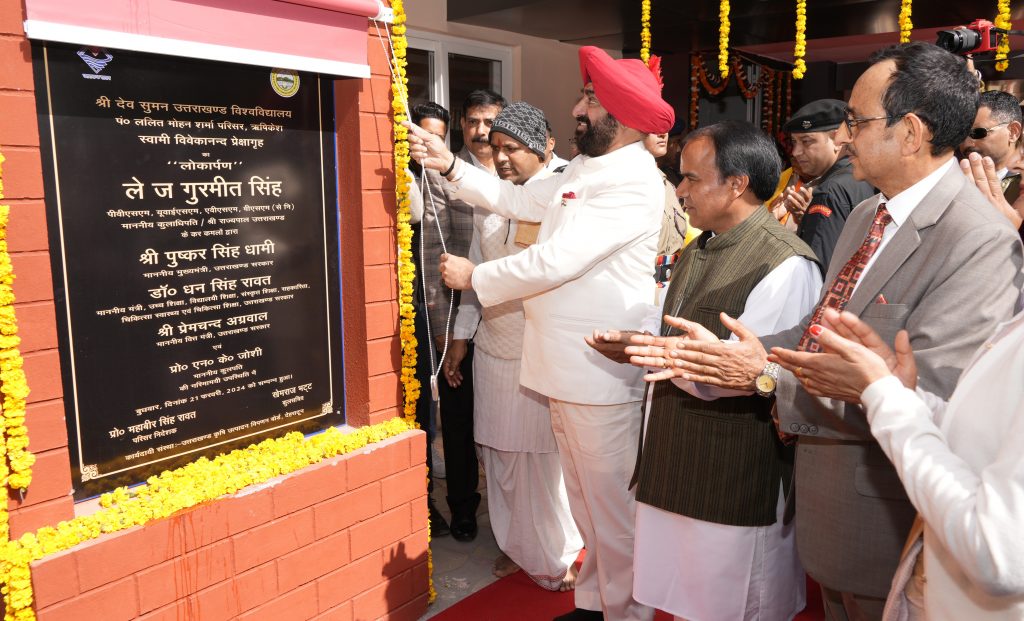
Today, Shri Dev Suman Uttarakhand University bears his name — an institution of higher learning in the very land he fought to liberate through knowledge as much as sacrifice. His Balidan Diwas on 25 July is observed across the state each year, with tributes paid by citizens, students, and political leaders alike. Streets, schools, and public spaces carry his name throughout Uttarakhand, ensuring that the boy from Jaul village who became the conscience of Garhwal is never forgotten.
In the broader sweep of Indian history, Shri Dev Suman represents a dimension of the independence struggle that deserves far greater national recognition: the simultaneous battle against both British colonialism and indigenous feudalism. His life reminds us that for millions of Indians, freedom was a multi-layered aspiration — freedom from foreign rule, yes, but equally from the domestic tyranny of caste, class, and autocracy. It is a lesson as relevant today as it was in 1944.
🔗 Related Reading: Field Marshal Kariappa and his legacy in the Indian Army.
🔗 Related Reading: Amazing Story of India's First Rocket Launch from TERLS
❓ Frequently Asked Questions about Shri Dev Suman
Who was Shri Dev Suman and why is he historically significant?
Shri Dev Suman, born Shri Dutt Badoni on 25 May 1916 in Jaul village, Tehri Garhwal, was an Indian freedom fighter, poet, and social reformer who waged a dual independence struggle: against British colonial rule at the national level, and against the autocratic feudal monarchy of the Tehri Garhwal princely state at the regional level. His historical significance rests on several pillars. As the co-founder and secretary of the Tehri Rajya Praja Mandal (founded 23 January 1939), he organised and led the most sustained popular movement against the oppressive Tehri monarchy, demanding the abolition of the begar system, civil liberties, and responsible government. His 84-day hunger strike in 1944 — resulting in his martyrdom at age 28 — directly galvanised the popular movement that ultimately led to the Tehri Riyasat's merger with independent India on 1 August 1949. He is revered in Uttarakhand as a Gandhian martyr of the first order, and his legacy shaped figures as consequential as environmentalist Sunderlal Bahuguna.
How long did Shri Dev Suman's hunger strike last, and what were his demands?
Shri Dev Suman's hunger strike lasted 84 days, commencing on 3 May 1944 and ending with his death on 25 July 1944. He had by that point been imprisoned in the Tehri jail for a total of 209 days since his arrest on 30 December 1943. The fast-unto-death was a direct response to the inhuman conditions of his imprisonment — deliberate physical torture, contaminated food, heavy iron fetters — and to the broader injustice of the Tehri Riyasat's feudal regime. His demands, consistent throughout his activism, were: the complete independence of Tehri Riyasat from monarchical autocracy; the abolition of the begar (forced unpaid labour) system; the removal of arbitrary and oppressive taxes; the guarantee of civil liberties for all subjects; and responsible, representative governance. The Tehri monarchy offered him acquittal if he withdrew these demands and ended his fast — an offer he refused categorically.
What was the Tehri Rajya Praja Mandal and what role did Suman play in it?
The Tehri Rajya Praja Mandal (People's Council of the Tehri State) was the principal organised movement for democratic rights and the liberation of the Tehri Garhwal princely state from monarchical rule. It was co-founded on 23 January 1939 in Dehradun, with Shri Dev Suman serving as its secretary. Suman was the movement's most prominent public figure and youth leader, responsible for drafting its demands, representing it at national-level forums (including the All India States People's Conference in Ludhiana, 1939), organising civil disobedience, editing underground publications, and maintaining organisational coherence under severe state repression. The Praja Mandal's core demands were the abolition of the begar system, fair taxation, civil rights, and a transition to responsible government. Suman's martyrdom in 1944 transformed the Praja Mandal from a reform movement into a liberation movement, dramatically accelerating the end of feudal rule in Tehri.
What happened to Shri Dev Suman's body after his death in Tehri jail?
The Tehri jail authorities, acutely aware that news of Suman's death would provoke mass popular outrage, initially attempted to conceal the martyrdom entirely. His body was sealed in a cotton bag and thrown into the swift-flowing waters of the River Bhilangana — without cremation, funeral rites, or any ceremony. The body was never recovered. Some local accounts also suggest that the king had Suman's corpse displayed on a tree in Srinagar to intimidate other protesters — though this detail remains part of oral tradition. When news of the cover-up reached the people of Tehri Garhwal, the reaction was one of profound grief and intense anger. The knowledge that their beloved leader had been denied even the dignity of a proper death accelerated the popular uprising and rendered the monarchy's authority irreparably damaged in the eyes of the public.
How is Shri Dev Suman remembered in Uttarakhand today?
Shri Dev Suman is remembered as one of the most revered martyrs in the history of Uttarakhand. His Balidan Diwas (Martyrdom Day) is observed on 25 July every year across the state, with tributes paid by government officials, social organisations, students, and citizens. Shri Dev Suman Uttarakhand University, a state university in Tehri Garhwal, bears his name — a lasting institutional tribute to his belief in education as a tool of liberation. Streets, schools, and public squares in Tehri, Dehradun, and other cities of Uttarakhand are named in his honour. His wife, Vinay Lakshmi Saklani, carried his legacy into democratic politics, serving as an MLA from Devprayag in 1957 and 1962. The environmentalist Sunderlal Bahuguna — who globalised the Chipko Movement — publicly credited Suman as a defining mentor. Beyond formal commemorations, Suman occupies a place in the cultural memory of Garhwal as the embodiment of principled self-sacrifice — the man who chose death over compromise.
