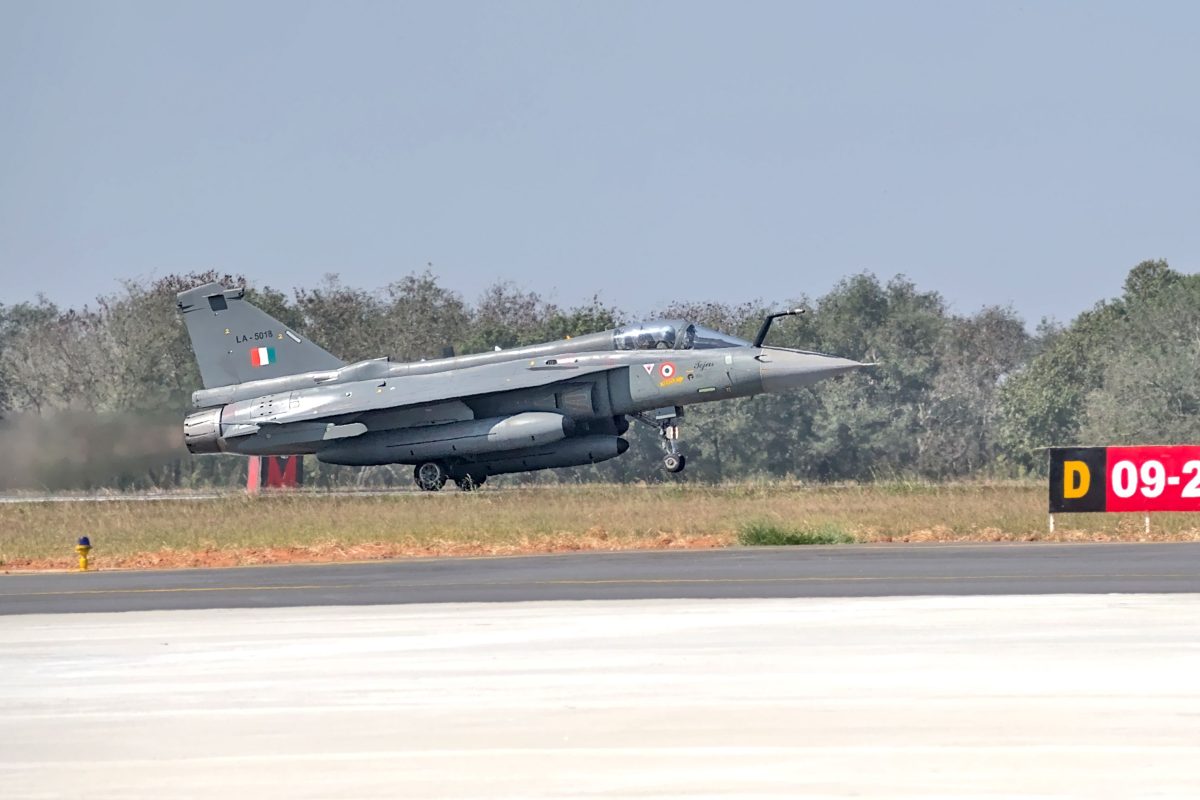
Atmanirbhar Bharat in defence is India’s policy effort to strengthen domestic capability across the design, development, production, maintenance and support of military equipment. The objective is not simply to assemble imported systems locally. It includes developing technologies, building reliable supply chains, expanding private-sector participation, improving research and testing, supporting exports and reducing vulnerabilities created by dependence on external suppliers. Self-reliance is a long-term process, not a claim that every defence requirement can already be met domestically.
Why defence self-reliance matters
Military capability depends on access to equipment, spares, ammunition, software updates, maintenance and technical support over decades. External supply restrictions, geopolitical crises, export controls or disruptions can affect readiness. A stronger domestic industrial base can improve resilience, create skilled employment and give the armed forces more control over upgrades and sustainment. However, domestic production must still meet demanding standards for reliability, safety, performance and cost.
What counts as indigenous capability?
Indigenous capability includes more than the final platform. It may involve design authority, critical components, engines, sensors, materials, software, electronics, testing infrastructure, maintenance and the ability to modify a system. A product assembled in India may still rely heavily on imported components. Conversely, a system developed domestically may use some foreign subsystems. It is therefore important to examine the actual indigenous content, technology ownership and supply-chain dependencies rather than rely on a single label.
Defence production and industry participation
India’s defence industrial ecosystem includes defence public-sector undertakings, private manufacturers, shipyards, start-ups, MSMEs, research laboratories and academic institutions. Public-sector companies continue to play a major role, while private firms have expanded in aerospace structures, electronics, software, communications, vehicles, components and precision manufacturing. A competitive ecosystem requires predictable procurement, clear quality standards, timely payments, access to testing facilities and long-term demand visibility.
DRDO and technology development
The Defence Research and Development Organisation develops and supports technologies across missiles, radars, electronics, combat vehicles, aircraft systems, naval systems, materials and other fields. Technology transfer and industry partnerships help move research from laboratories into production. The Technology Development Fund and other programmes are intended to encourage industry, start-ups and academia to work on defence technologies. Successful transition requires prototype validation, user trials, certification, production engineering and lifecycle support.
Procurement reforms and indigenisation
Procurement policy can encourage domestic design and manufacturing through categories that prioritise Indian vendors, positive indigenisation lists and restrictions on importing selected items once domestic capability is available. These measures can create demand for local suppliers, but they must be accompanied by realistic timelines and quality assurance. If domestic suppliers cannot meet urgent operational needs, the services may still require foreign purchases or collaboration.
Defence exports
Exports can help domestic companies achieve scale, sustain production lines and build long-term relationships with foreign customers. Export success depends on price, reliability, after-sales support, training, financing, certification and diplomatic relationships. Governments must also manage export licences, end-user assurances and international obligations. Export announcements should be distinguished from signed contracts and actual deliveries.
What the latest production figures show
The Ministry of Defence reported that India’s defence production reached a record ₹1.78 lakh crore in FY 2025–26, up 15.6 per cent from the previous fiscal year. The government also reported defence exports of ₹38,424 crore in FY 2025–26. These are important indicators of industrial scale, but they do not by themselves measure technological independence, operational performance or the proportion of critical components sourced domestically.
Challenges that remain
Key challenges include dependence on imported engines and high-end electronics, long development cycles, gaps in testing and certification capacity, fragmented supply chains, inconsistent order flows, cost competitiveness and the need for stable lifecycle support. Advanced systems require deep expertise in materials, propulsion, software, sensors and systems integration. Domestic production targets must therefore be matched with research investment, skilled workers, supplier development and credible user feedback.
How to measure genuine self-reliance
Useful indicators include domestic design authority, local value addition, control over critical intellectual property, the ability to repair and upgrade systems, supply-chain resilience, export competitiveness and the operational performance of equipment in service. A system should not be called fully indigenous solely because it is assembled locally. Equally, international collaboration can contribute to self-reliance when it results in genuine technology absorption, local engineering and sustainable domestic capability.
Related coverage
Read our coverage of India-UAE defence co-development and Europe’s defence-industry expansion.