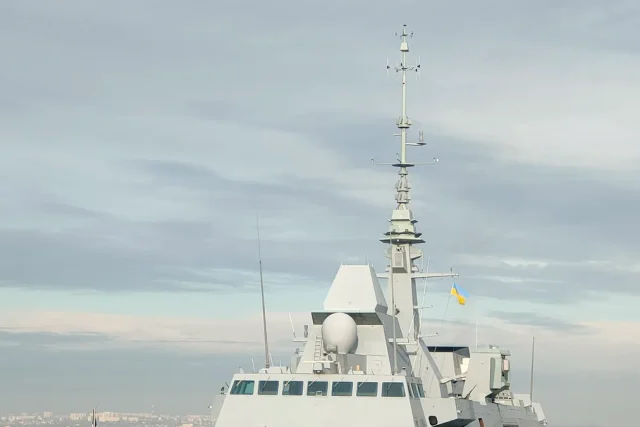
A dispute between France and Germany over whether European Union defence funding should favour weapons made in Europe is complicating negotiations on the bloc’s 2028–34 budget, exposing competing views about industrial sovereignty, military procurement and the role of the EU in security policy.
France wants defence funding to be reserved more firmly for European-produced equipment, arguing that public money should strengthen the continent’s own defence-industrial base. Germany, supported by countries including the Netherlands, opposes restrictive sourcing rules and argues that national governments should retain flexibility over the equipment they buy, including systems from suppliers outside Europe.
Why the funding debate matters
The proposed EU defence and security allocation for the 2028–34 budget has reportedly been reduced from an earlier €131 billion proposal to €92 billion. Even at the lower figure, the allocation would be more than three times the current budget’s provision, but the reduction has alarmed governments that want stronger collective investment in defence-related capabilities.
The argument is not simply about where a weapon is assembled. European governments are weighing the benefits of building domestic production capacity against the urgency of acquiring equipment that is already available. Strict local-content rules could channel more investment to European companies and help sustain jobs, technology and supply chains. But they could also narrow the pool of eligible suppliers, complicate urgent purchases and create disagreements over what counts as sufficiently European.
Strategic autonomy versus procurement flexibility
France has long advocated greater European strategic autonomy: the ability to develop, produce and sustain key military capabilities without excessive dependence on external suppliers. That approach has gained attention as European states seek to respond to Russia’s war against Ukraine, uncertainty over long-term US commitments and vulnerabilities in munitions, air defence, drones, space and intelligence systems.
Germany’s position reflects a different concern. Several European militaries rely on US-designed equipment, and governments argue that procurement decisions must be driven by operational needs, delivery schedules and interoperability. Berlin and like-minded capitals do not want funding rules to prevent them from buying a system that best meets their requirements simply because it is manufactured outside the EU.
Eastern European security concerns
Countries on the EU’s eastern flank are particularly concerned that budget reductions or prolonged negotiations could weaken programmes for drones, intelligence, space, air defence and maritime security. EU Defence Commissioner Andrius Kubilius has warned that cuts could put shared capability projects at risk, while Baltic leaders have argued that support for the eastern border must remain a priority.
The dispute is unfolding as European NATO members pursue large national and joint purchases. Five countries, for example, are moving towards a major CV90 infantry fighting vehicle procurement. That programme shows how cooperation can create scale, but it does not resolve the wider question of whether EU-level funding should favour European suppliers.
For more context, see our reporting on security pressures on NATO’s eastern flank and the expansion of Europe’s defence industry.
Outlook: EU governments will need to reconcile industrial policy with the practical requirement to field capable forces quickly. A compromise may define eligibility around European value-added, supply-chain resilience or technology participation rather than impose an absolute ban on non-European equipment. No final budget settlement has yet been reached.
Source: Financial Times, 26 November 2026.
Related coverage: India-UAE defence co-production | Indian Army highway aviation demonstration.
Related coverage: European military spending outlook | UK submarine maintenance investment.