
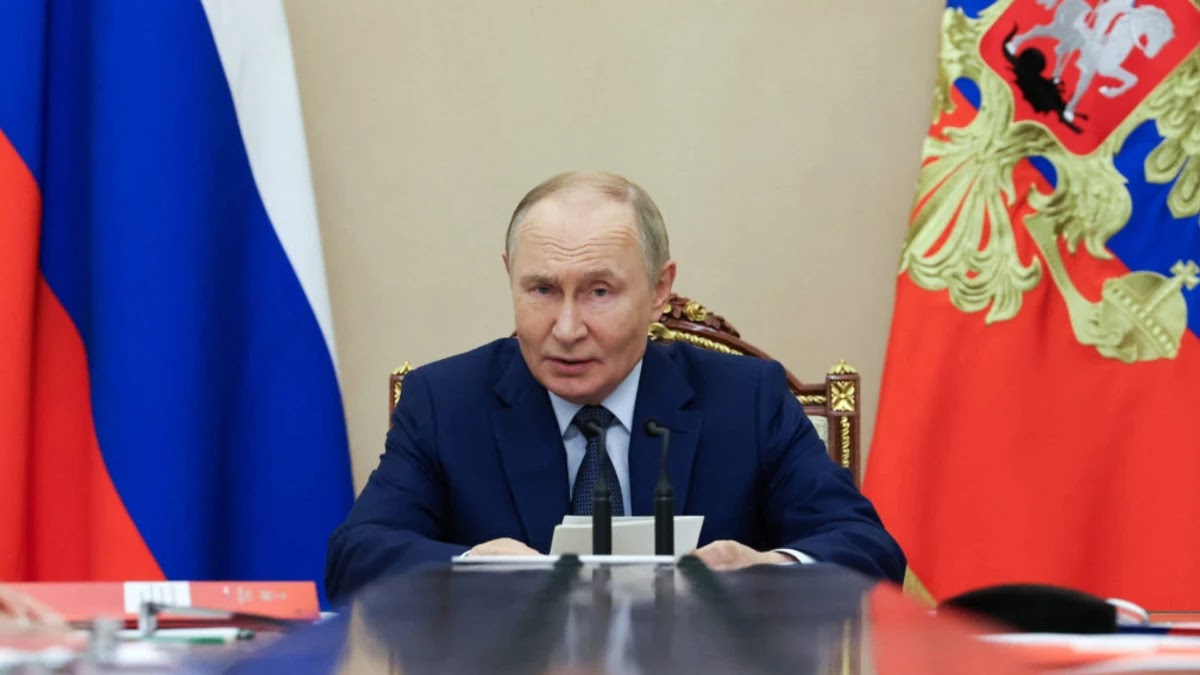
New Delhi | Russian President Vladimir Putin has announced that Russia will unilaterally continue to observe the limits of the New START nuclear arms treaty for one year after its expiration in February 2026, a surprising move that signals a potential de-escalation of nuclear tensions. The decision comes despite Russia’s suspension of its participation in the treaty last year and a deepening lack of dialogue with the United States on a successor agreement.
The New START treaty, signed in 2010, is the last remaining arms control pact between the world’s two largest nuclear powers, limiting each nation to 1,550 deployed nuclear warheads and 700 deployed missiles and bombers. Putin’s announcement, made in Moscow, is a direct challenge to the U.S. to reciprocate and uphold the treaty’s caps, even as the formal agreement lapses.
Read about the nuclear doctrines of the Global Powers.
This move holds significant global implications. Arms control advocates have expressed growing alarm over the absence of discussions for a new deal, fearing a return to an unconstrained nuclear arms race.
Russia’s decision, while not a full return to the treaty, maintains a critical and verifiable cap on its nuclear arsenal, which could serve as a stopgap measure for global stability. The timing is crucial, as on-site inspections—a key feature of the pact—have been dormant since 2020, adding to a climate of strategic uncertainty.
The core conflict lies in the suspension of Russia’s participation in February 2023, which was prompted by concerns over U.S. inspection protocols at Russian nuclear sites.
Also read about How These Indigenous Drone Jammers Could Be a Game-Changer for the Indian Army
While the U.S. has not yet formally responded to the new pledge, the absence of a successor treaty has made this interim commitment a key development.
This unilateral extension provides a temporary window of opportunity for both nations to re-engage in diplomatic discussions and work toward a more permanent solution for nuclear nonproliferation and stability.