

WASHINGTON / DUBAI — The fragile ceasefire between Washington and Tehran has suffered a severe blow. The United States military launched a massive wave of retaliatory air strikes inside Iran, sharply escalating the regional conflict after three commercial oil tankers were attacked in the strategically vital Strait of Hormuz.
According to official statements obtained by Reuters, U.S. Central Command (CENTCOM) confirmed it targeted more than 80 distinct military sites inside southern Iran to “impose heavy costs” for what Washington terms a direct violation of the active ceasefire agreement.
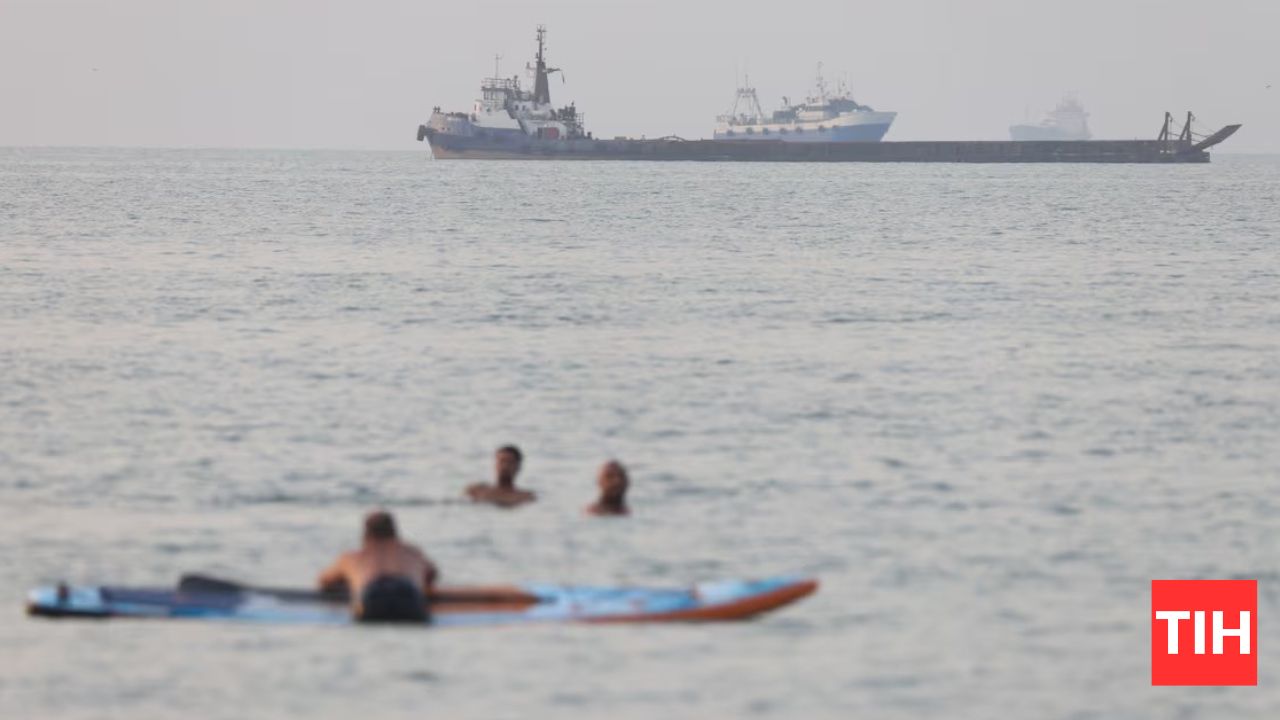
The Catalyst: Projectiles and Drones in the Strait
The military flare-up followed a sequence of maritime security breaches over a 48-hour window in the waters off Oman. The United Kingdom Maritime Trade Operations (UKMTO) agency raised the regional threat level to “severe” after reporting that three commercial vessels—including a Saudi-flagged tanker (Vijian) and a Qatari-flagged tanker (Rakiyat)—were targeted.
- One tanker was set ablaze overnight after being hit by an “unknown projectile.”
- At least one subsequent attack was carried out by an uncrewed aerial vehicle (UAV/drone).
- Maritime analysts note the vessels were navigating a newly proposed Omani transit corridor, an initiative Iran has openly opposed as it attempts to regulate and levy transit fees on traffic moving through the chokepoint.
Anatomy of the US Retaliation
In a rapid response authorized by President Donald Trump while attending the NATO summit in Turkey, CENTCOM deployed assets to neutralize Iranian coastal and offensive capabilities.
“U.S. forces struck Iranian air defense systems, command and control networks, coastal radar sites, anti-ship missile capabilities, and more than 60 Islamic Revolutionary Guard Corps (IRGC) small boats in and near the strait,” CENTCOM announced via an official statement carried by Reuters.
Iranian state media corroborated reports of heavy explosions across coastal hubs, documenting six projectile impacts near the Taheroui pier in Sirik, seven on Qeshm Island, and multiple detonations near the major port city of Bandar Abbas.
Economic and Diplomatic Fallout
The military response was matched immediately by severe economic penalties. The U.S. Treasury Department officially revoked “General License X”—a temporary 60-day sanctions waiver enacted in June that allowed Iran to sell and deliver crude oil through August 21. A U.S. official speaking to the press emphasized that the memorandum of understanding (MoU) signed last month was entirely “performance-based” and that Iran’s aggression was “wholly unacceptable.”
| Action Taken | Primary Objective | Impact on Iran |
|---|---|---|
| 80+ Kinetic Air Strikes | Degrade IRGC maritime & radar networks | Loss of coastal defense infrastructure & 60+ small boats |
| Revocation of License X | Cut off state oil revenues | Immediate halt to legalized crude oil exports through Aug 21 |
In response, Iran’s Foreign Ministry accused Washington of a “blatant act of aggression” and a direct breach of Section 10 of their memorandum. Iranian state television confirmed that President Masoud Pezeshkian abruptly cut short his state visit to Iraq to return to Tehran, while Iran’s top joint military command warned of an impending “crushing response” to protect its sovereignty over the Strait of Hormuz.
Despite the violence, U.S. officials maintain that back-channel negotiators are still attempting to work in good faith toward a permanent settlement, though the resurgence of active hostilities leaves the peace process highly volatile.
Source: Reporting via Reuters (Kanishka Singh, Jasper Ward, Idrees Ali, and Phil Stewart).