
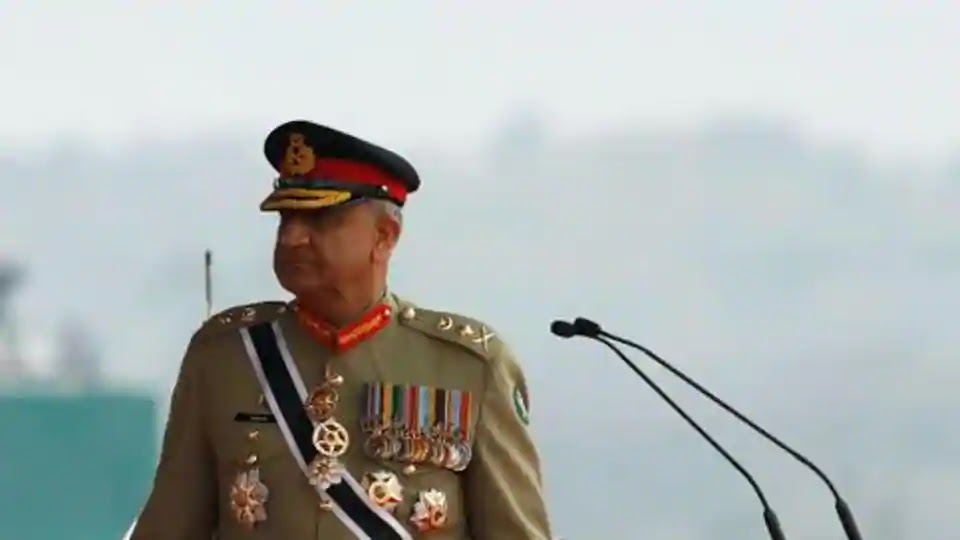

The “creeping coup” in Pakistan is a result of the powerful military trying to safeguard its economic interests which might not be protected in a federal and democratic system, the spokesperson of an opposition party has said while calling for changing the basis of the country’s relations with India.
Addressing the fifth annual conference of South Asians Against Terrorism and for Human Rights (SAATH), Pakistan People’s Party spokesman and former Senator Farhatullah Babar said Pakistan’s parliament was unable to hold the military accountable.
“In their hearts, Pakistan’s generals do not accept the country’s Constitution. That is why they have built a national narrative that is against democratic values and puts the army above all institutions,” he said at the event from Pakistan through a video conference.
Babar called for changing the basis of Pakistan’s relations with India, which he said had been predicated on the resolution of the Kashmir issue as Pakistan wants it.
“If China and India can have trade relations despite their conflicts, why can’t Pakistan?” He asked, hinting that good relations with India would help advance democratic norms and civilian supremacy in Pakistan.
He said the “creeping coup” in Pakistan was the result of the powerful military trying to safeguard its economic interests which might not be protected in a federal and democratic system.
Speaking at the virtual event from Islamabad, the former Senator said that the protests against the army that started in Pashtun tribal regions have now reached Punjab, the heartland of the Pakistan Army.
He said the young people are discovering that “the emperor has no clothes”, according to a statement issued by SAATH.
Babar lamented that Pakistan’s parliament was unable to hold the military accountable and was deprived of the most elementary information about the military’s spending and other matters.
“The hybrid regime is fighting a hybrid war against the people of Pakistan by curbs on media and freedom of expression,” he added.
In his remarks, Babbar expressed hope that the exiled members of SAATH, a grouping of prodemocracy Pakistanis co-founded by former Pakistan ambassador the U, Husain Haqqani and US-based columnist, Dr. Mohammad Taqi, could speak out about matters that can no longer be raised in Pakistan’s repressed media.
Mohsin Dawar, a member of the National Assembly from Waziristan and a leading figure in Pashtun Tahaffuz Movement (PTM), said that the regime was trying to bring the Taliban back to power and to break the bond between the Pashtuns on both sides of the Durand Line.
Dawar also expressed concern over Pakistan’s survivability, asserting that the people of Pakistan seem fed up with the army’s dominance and intrusion in all spheres of life.
“If the political leaders fail, the people will definitely stand up against the dictatorship,” he observed.
Former parliamentarian Bushra Gohar said that young Pakistanis, lawyers, and women have started challenging the status quo in Pakistan and the “repressive” regime cannot prevail forever.
Gohar questioned “secret talks between Pakistan’s military leaders and US Special Envoy for Afghanistan Zalmay Khalilzad over the future of Afghanistan, which have serious implications for Pakistan’s Pashtuns.
She called for demilitarisation of the Pashtun region.
Resolutions passed by participants also condemned enforced disappearances and erosion of freedom of expression.
Most speakers also criticised Pakistan’s major political parties for compromising often with the military, instead of ensuring civilian supremacy under the Constitution.
Haqqani and Taqi welcomed the recent formation of the Pakistan Democratic Movement, an alliance of opposition political parties, and expressed hope that “they would resist the Pakistani establishment’s totalitarian project and not just bargain for a share in power.”
<<Source>>