
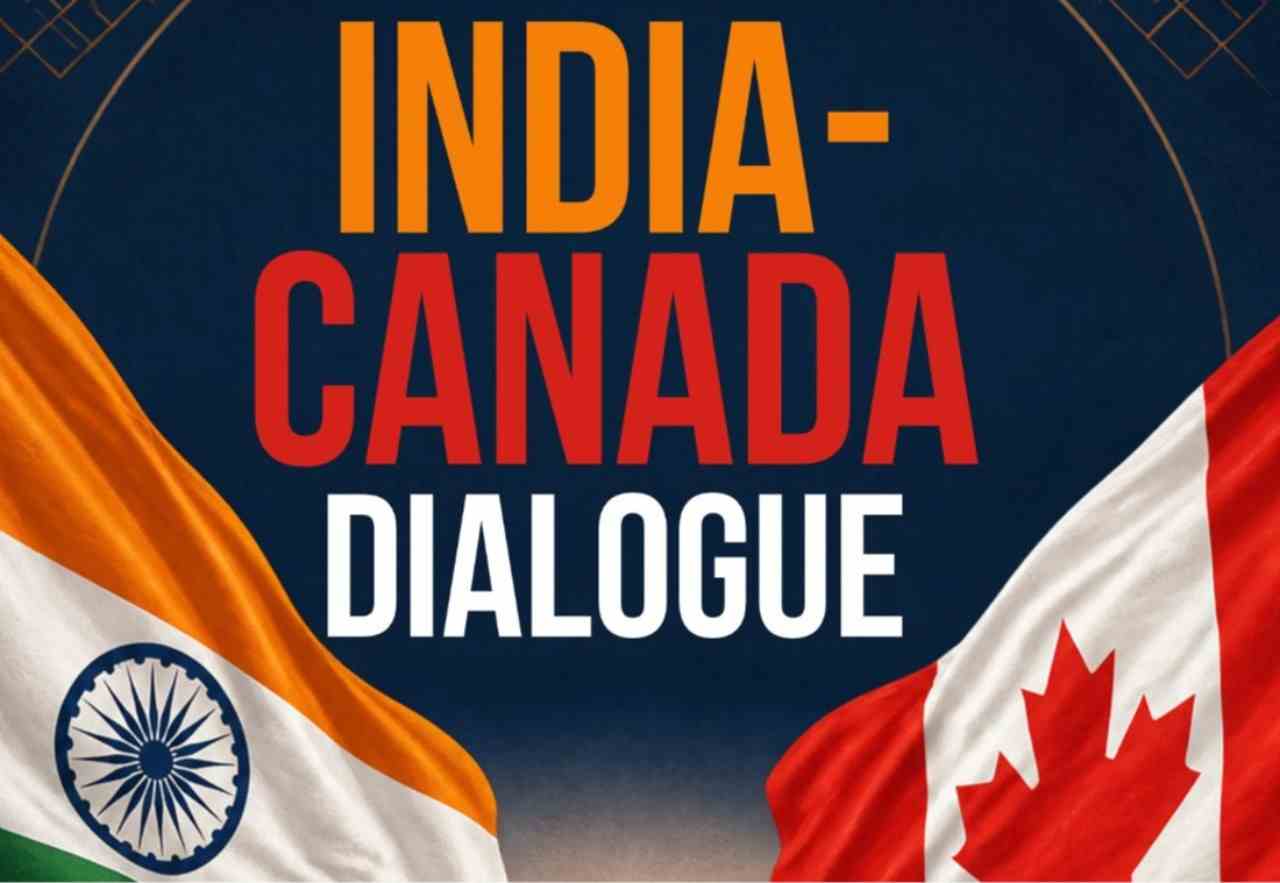
NEW DELHI — In a historic milestone that signals a significant realignment and stabilization of bilateral relations, India and Canada officially convened the inaugural edition of the India–Canada Defence Dialogue virtually on 3 November 2026. The institutionalized meeting marks a critical step forward in executing the broad strategic roadmap laid down earlier this year by the leadership of both nations. It transitions high-level political commitments into concrete military, industrial, and technological framework actions.
The virtual dialogue was co-chaired by Dr. Amit Telang, Joint Secretary (International Cooperation), Ministry of Defence, representing the Republic of India, and Mr. Scott Millar, Assistant Deputy Minister (Policy), Department of National Defence, representing Canada.
According to official releases from the Ministry of Defence, the two sides engaged in an exhaustive exchange of views regarding their respective domestic defence frameworks, strategic outlooks, and regional security dynamics. The primary focus remained on carving out actionable vectors for sustained, long-term bilateral defence cooperation.
The Strategic Catalyst: Delivering on the Modi-Carney Mandate
The establishment of this institutional dialogue did not happen in a vacuum. The talks directly fulfill the executive mandate established on 2 March 2026, when Indian Prime Minister Shri Narendra Modi and Canadian Prime Minister Mr. Mark Carney issued a comprehensive Joint Statement in New Delhi.
| Core Feature | India–Canada Defence Dialogue Framework Details |
|---|---|
| Date of Session | 3 November 2026 |
| Indian Representative | Dr. Amit Telang, Joint Secretary (International Cooperation), Ministry of Defence |
| Canadian Representative | Mr. Scott Millar, Assistant Deputy Minister (Policy), Department of National Defence |
| Primary Mandate Source | Modi-Carney Joint Statement (Issued on 2 March 2026) |
| Core Areas of Engagement | Defence Industrial Cooperation, Military-Technical Exchanges, Joint Research & Development |
Following Prime Minister Carney’s assumption of office, Ottawa has systematically recalibrated its foreign policy approach toward the Indo-Pacific region. For years, relations between the two G20 economies had faced periods of diplomatic friction. However, the economic and security realities of a fractured global landscape have pushed both administrations to prioritize institutionalized mechanisms over political cycles.
By creating a structured platform for civil servants and military planners, the India-Canada Defence Dialogue effectively creates a resilient bureaucratic buffer. This ensures that operational, scientific, and industrial ties remain insulated and move forward at a steady pace.
3 Core Pillars of the New India-Canada Defence Alignment
During the session, the co-chairs moved rapidly past diplomatic protocols to define the functional architecture of their partnership. The dialogue identified three central pillars intended to anchor all future collaborative projects:
1. Defence Industrial Cooperation
The most critical takeaway from the dialogue was the mutual intent to align the manufacturing strengths of both nations. Canada has been aggressively expanding its defence outlays, hitting its target of 2% of GDP spent on defence with an eye toward further modernization. Meanwhile, India’s Aatmanirbhar Bharat (Self-Reliant India) initiative has created a booming domestic manufacturing ecosystem eager for technology integration.
- Subsystem Manufacturing: Exploring opportunities for Canadian firms to integrate components into Indian aerospace and naval projects.
- Supply Chain Resilience: Minimizing reliance on adversarial nations for critical military hardware and sub-assemblies.
2. Military-Technical Cooperation
Beyond simple procurement, both delegations emphasized tactical and technological interoperability. The talks explored capacity building, expanded military exchanges, and enhancing maritime domain awareness (MDA). Given Canada’s massive Arctic and coastal defense experience and India’s extensive oversight of the Indian Ocean Region, the synergy offers clear advantages for tracking maritime traffic and identifying shared security vulnerabilities.
3. Defence Research and Development (R&D)
Both delegations earmarked defence R&D as an urgent priority area. Canada recently announced a half-billion-dollar investment pool strictly dedicated to next-generation aerospace and drone innovation. Bringing the premier laboratories of India’s Defence Research and Development Organisation (DRDO) together with Canadian innovators creates an ideal setup for co-developing autonomous systems, cold-climate warfare gear, and advanced space robotics technology.
Navigating Global Geopolitics and Regional Dynamics
The virtual table served as a forum for high-level intelligence and perspective sharing on global hot spots. Officials familiar with the proceedings noted that the two sides exchanged views on overarching regional and global security issues.
For India, maintaining an open, rule-based Indo-Pacific remains a vital national security priority. For Canada, under the leadership of Prime Minister Mark Carney, expanding trade, investment, and security partnerships across Asia is essential for its modern economic diversification strategy. The alignment of Canada’s updated Indo-Pacific strategy with India’s long-standing Security and Growth for All in the Region (SAGAR) framework indicates that both countries see each other as indispensable anchors against unilateral hegemony in the Eastern Hemisphere.
Furthermore, the discussion touched upon tangible mechanisms to advance these strategic perspectives into reality, ensuring that the dialogue yields clear, time-bound results rather than just diplomatic rhetoric.
The Path Ahead: From Dialogue to Deliverables
Rather than a single, isolated check-in, the co-chairs explicitly agreed to remain in regular contact to systematically advance the proposals raised during the conversation. Analysts predict that the success of this inaugural session will pave the way for several major milestones over the next 12 to 18 months:
- Finalization of a Mutual Logistics Support Agreement (MLSA): To simplify naval and air force replenishment during joint exercises.
- Critical Minerals Collaboration: Aligning Canada’s deep reserves of 31 critical minerals—such as uranium and lithium—with India’s rapidly growing defense and green-tech manufacturing sectors.
- Reciprocal Military Accreditation: Streamlining the posting of defense attaches and technical observers to fast-track intelligence sharing and engineering cooperation.
By moving from a period of diplomatic caution to an era of structured, institutional defense talks, New Delhi and Ottawa have quietly opened a highly practical chapter in their bilateral history. The inaugural India-Canada Defence Dialogue demonstrates that when it comes to national security, technological innovation, and industrial supply chains, strategic necessity consistently trumps diplomatic friction.