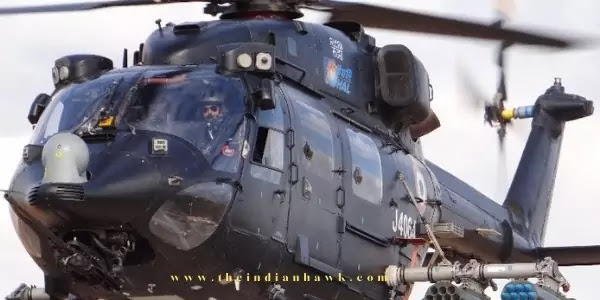
Quick answer: The Indian Navy and Indian Coast Guard are reportedly planning a procurement of 76 utility helicopters under a proposed programme valued at around ₹15,000 crore. The reported requirement is 51 helicopters for the Navy and 25 for the Coast Guard. The proposal is not yet a signed acquisition contract.
India’s maritime forces could be preparing for a major renewal of their utility helicopter fleets, with a proposed programme aimed at replacing ageing Cheetah and Chetak aircraft. The reported plan would combine a large aircraft requirement with a domestic manufacturing approach involving Indian companies and foreign original equipment manufacturers.
₹15,000-Crore Plan Covers 76 Helicopters
According to a report by The Economic Times citing defence sources and ANI, the proposed programme covers 76 helicopters. The Indian Navy is expected to account for 51 aircraft, while the Indian Coast Guard would receive 25.
The reported plan is expected to be considered at a high-level Defence Ministry meeting. It may be pursued under the Buy and Make (Indian) category of the Defence Acquisition Procedure, which is intended to combine domestic production with participation by foreign manufacturers where required.
The forces are reportedly looking at helicopters in the five-tonne-plus category. The final platform, technical requirements, procurement route and delivery schedule should be treated as unconfirmed until the government issues formal documentation.
Why the Navy and Coast Guard Need New Utility Helicopters
Utility helicopters are important for maritime forces because they can operate from shore bases and, where the aircraft and ship are configured for it, from naval vessels. Their missions can include search and rescue, casualty evacuation, logistics support, surveillance and movement of personnel.
The reported programme is intended to address the ageing Cheetah and Chetak fleets. These aircraft have served Indian military and maritime organisations for decades, but fleet replacement is necessary to improve availability, safety, maintainability and mission performance as operational requirements evolve.
For the Coast Guard, helicopters are especially valuable in search-and-rescue and coastal security operations. The service’s official aircraft information identifies rotary-wing Chetak and Advanced Light Helicopter platforms among its aviation assets, with roles including search and rescue, casualty evacuation and coastal security.
Domestic Manufacturing Could Be a Key Requirement
The reported Buy and Make (Indian) approach suggests that the programme could be structured around manufacturing in India through partnerships between domestic firms and foreign OEMs. Such an arrangement could support local production, maintenance capacity and a domestic supplier base, depending on the final contract conditions.
However, the reported ₹15,000-crore figure should be understood as the estimated value of a proposed programme, not an amount already awarded to a manufacturer. No final supplier selection or signed contract has been established in the reporting available on 24 November.
How This Fits Into India’s Wider Helicopter Modernisation
The 76-aircraft proposal is part of a wider effort to renew rotary-wing capability across the armed forces. The Army and Air Force have separate light utility helicopter requirements, while the Navy is also pursuing other naval aviation programmes.
The Navy’s requirement for maritime helicopters is shaped by shipboard operations, corrosion resistance, safety over water and the need to operate from limited deck and hangar space. The service is also pursuing the MH-60R Romeo multi-mission helicopter programme, which addresses a different set of naval aviation requirements.
The proposed utility helicopter acquisition should therefore be viewed as one component of a larger aviation modernisation effort, rather than a replacement for every helicopter type operated by the Navy and Coast Guard.
What Happens Next?
The next milestones to watch are formal consideration by the Defence Ministry, confirmation of the procurement category, release of technical requirements and the eventual tender or request for proposal. Those steps will clarify the aircraft configuration, industrial participation, cost and expected delivery timeline.
Bottom line: The reported 76-helicopter proposal could be a significant modernisation step for India’s maritime forces, with 51 aircraft envisaged for the Navy and 25 for the Coast Guard. Until the government issues a formal approval or contract, the programme remains a reported procurement plan.
With inputs from The Economic Times and ANI reporting dated 23 November 2026; background on Coast Guard aircraft roles from the Indian Coast Guard.
How the 76 Helicopters Would Be Divided
The reported requirement allocates 51 aircraft to the Indian Navy and 25 to the Indian Coast Guard. The proposal is expected to focus on helicopters in the five-tonne-plus category, with production in India through partnerships between domestic manufacturers and foreign original equipment makers. The reported value is around ₹15,000 crore, but the final cost would depend on the selected platform, equipment package, local manufacturing share, support arrangements and contract terms.
The distinction between a proposal and a procurement contract is important. The requirement has been reported by defence sources, but the public information available at the time of writing does not establish that a platform has been selected, a formal tender has been issued, or a contract has been signed. A formal acquisition would normally progress through service-level requirements, acceptance of necessity, procurement approvals, solicitation and evaluation, negotiations and contract signature.
Why the Navy and Coast Guard Need Utility Helicopters
For the Navy, shipborne utility helicopters can support personnel movement, search and rescue, logistics, liaison, surveillance and other tasks at sea. The Coast Guard has overlapping but distinct requirements, including maritime search and rescue, pollution response, law-enforcement support and assistance to vessels in distress. A common broad class of aircraft does not necessarily mean the two services will receive identical configurations: sensors, communications, safety equipment, corrosion protection and mission systems may be tailored to each service.
Replacing older Cheetah and Chetak helicopters is also a question of availability and sustainment. Ageing fleets can become harder to maintain as components, technical support and airframe life become constraints. New aircraft could improve availability, but only if the procurement includes dependable spares, trained technicians, simulators, maintenance infrastructure and a long-term support package.
Industrial Choices and the Next Decision Points
A Buy and Make (Indian) approach, if adopted, could combine an overseas design with domestic production and a growing Indian supply chain. The final arrangement would need to specify technology transfer, local content, intellectual-property rights, repair capability and the extent to which Indian firms can manufacture critical components. These factors often determine whether an acquisition builds a lasting industrial capability or remains dependent on imported support.
The next developments to watch are the Defence Ministry’s consideration of the proposal, the formal procurement category, the technical requirements and any request for information or tender. Until those steps are publicly confirmed, the 76-aircraft figure should be described as a reported plan rather than an order. The proposal sits alongside other Indian naval aviation modernisation efforts, including the Navy’s separate requirement for shipborne helicopters.