
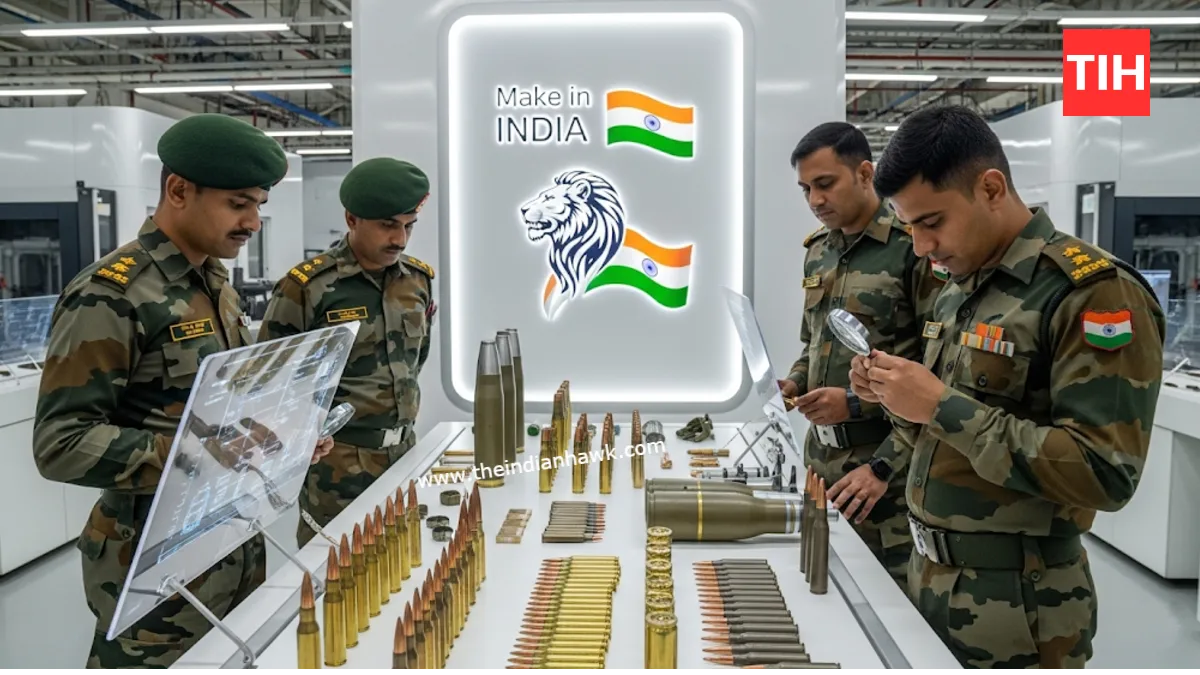
India’s armed forces are urgently working towards achieving complete self-reliance in ammunition manufacturing by the end of 2025. This ambitious goal, reported by PTI, is a direct response to critical shortages that emerged during Operation Sindoor. The military’s focus is on bolstering domestic production capacity to reduce its dependence on foreign imports for all defence needs. While this target is a significant step towards national security, it also highlights existing challenges in production and raw material supply.
Also read – Axiscades Technologies Lands ₹600 Crore Defence Deals from DRDO and BHEL
Challenges in Ammunition Production and Supply Chains
Achieving 100% indigenization in ammunition is not without its hurdles. Lieutenant General Amardeep Singh Aujla, the Master General Sustenance of the Indian Army, has highlighted the gap between stated production capacity and actual output. He noted a significant shortfall in the availability of key raw materials.
- Production Capacity: There is a noticeable difference between the reported and actual production of ammunition. The Army is seeking a substantial increase in output to meet its requirements.
- Raw Material Deficiencies: The country faces a shortage of critical raw materials, including propellants, explosives, and fuses. Lt. Gen. Aujla stated that production of these materials needs to be scaled up by five to six times to close the gap.
Other defence officials have echoed these concerns, emphasizing that these shortfalls pose a challenge to meeting the 2025 deadline for complete indigenization. Addressing these issues is crucial for making the country’s military fully self-reliant.
Also read – Russian Strikes on Prison, Hospital Leave 19 Dead, Trump Warns of Sanctions
Government’s Push for ‘Make in India’ in Defence
Sanjeev Kumar, Defence Secretary (Defence Production), has underscored the government’s long-standing emphasis on self-reliance. The government’s Make in India initiative extends beyond just major platforms and technology; it also includes essential components like ammunition.
During interactions with both private and public sectors, Kumar identified a lack of focus on producing the fundamental ingredients required for manufacturing. This new push aims to correct that and ensure all defence requirements are met domestically. This shift also opens up opportunities for private players to contribute to India’s defence ecosystem.
Also read – India’s ‘Pralay’ Missile System Completes Phase-1 User Trials
The Global Ammunition Market and India’s Export Potential
The global ammunition market is projected to grow from an estimated $25.8 billion in 2024 to $36.1 billion by 2033, with a CAGR of 3.44%. By achieving self-reliance, India not only secures its own military supply chain but also positions itself to become a key player in this growing global market. The goal is to ensure the Indian armed forces are never again constrained by supply limitations and to explore new opportunities for ammunition export.