
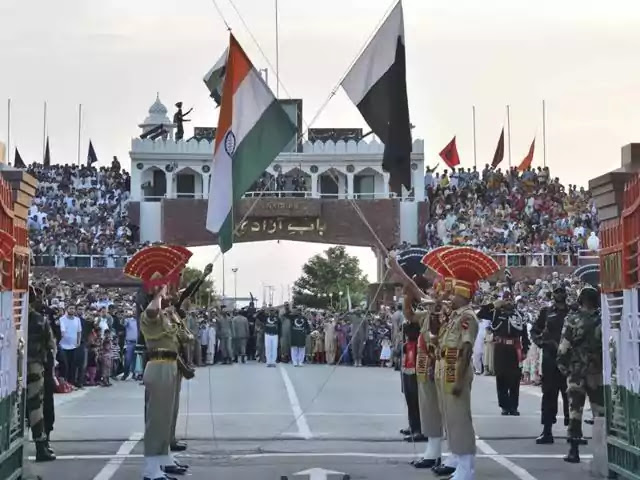
Amritsar: In a notable event in early 2020, more than 200 Hindu families from Pakistan crossed into India through the Wagah-Attari border. Many families arrived carrying large bundles of household belongings wrapped in bedsheets and tied with ropes, indicating their intention to settle in India.

Grand Reception at the Border
Indian security personnel and local leaders welcomed the families warmly at the Attari border. The arrivals received support and patriotic cheers, reflecting India’s solidarity with persecuted minorities from neighboring countries.
Why These Families Came to India
The families, mostly from Sindh province and Karachi, cited serious safety concerns in Pakistan. Many mentioned the frequent incidents of kidnapping and forced conversion of Hindu girls as a major reason for leaving. They expressed that they no longer felt safe in their homeland, especially for their daughters.
One woman from the group told reporters:
“We are not feeling safe in Pakistan. Our girls feel insecure as they fear that they could be kidnapped any time. Our girls cannot walk freely.”
Connection with Citizenship Amendment Act (CAA)
These arrivals happened shortly after the Citizenship Amendment Act (CAA) was passed in December 2019 and notified in January 2020. The CAA provides a faster route to Indian citizenship for persecuted non-Muslim minorities (Hindus, Sikhs, Buddhists, Jains, Parsis, and Christians) from Pakistan, Bangladesh, and Afghanistan who entered India on or before 31st December 2014.
Although these families entered after the cutoff date on visitor visas, their arrival highlighted the continuing persecution of Hindus in Pakistan and the hope for protection and citizenship in India.
Key Highlights of the Event
- Over 200 Hindu families arrived between mid-December 2019 and early February 2020.
- Most families carried heavy luggage, suggesting permanent relocation.
- They entered on tourist/visitor visas but expressed desire to stay long-term.
- Akali leader Manjinder Singh Sirsa personally received several families and announced plans to seek expedited help from the government.
Broader Context
Hindu and Sikh communities in Pakistan have faced ongoing challenges including forced conversions, temple attacks, and social discrimination. This migration wave brought renewed attention to the difficult conditions faced by religious minorities in Pakistan.
Note: Families arriving after 31 December 2014 follow standard immigration procedures, but the Indian government has shown humanitarian consideration in such cases.