
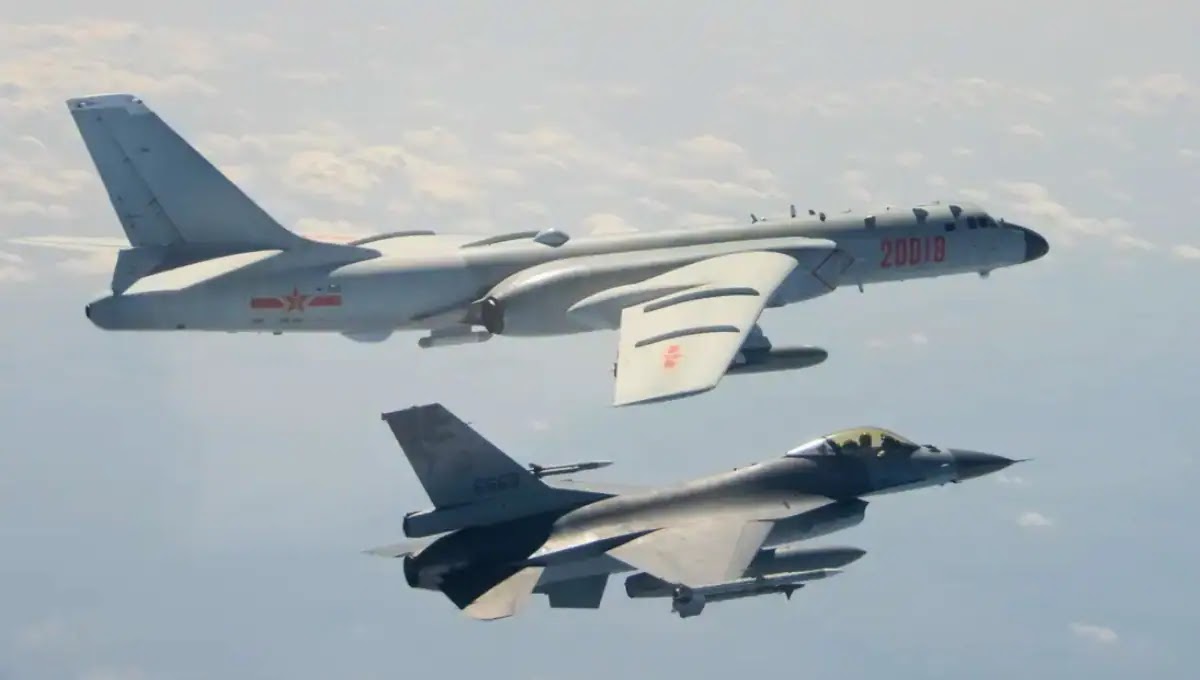
SEOUL — 24 November 2026: South Korea scrambled fighter aircraft and briefly warned residents of Ulleungdo to take shelter after Russian military aircraft entered the country’s air defence identification zone over the East Sea and approached the island, according to South Korean military and government statements.
The alert was issued at 7:52 a.m. local time and lifted at 7:55 a.m. The Joint Chiefs of Staff said the Russian aircraft came close to the point at which a violation of the island’s airspace was anticipated. The number and exact types of aircraft were not specified in the initial statement.
What happened near Ulleungdo
South Korean Air Force fighters were scrambled as the Russian aircraft approached the island, which lies roughly 120 kilometres off the country’s east coast. Residents received emergency messages and television broadcasts carried instructions to prepare to move to nearby shelters.
A separate provincial alert mistakenly referred to an object presumed to be a North Korean aircraft. Local authorities later said the wording had been carried over from a routine drill message and sent in error, adding to confusion during the brief warning.
Air defence identification zone: what it means
An air defence identification zone, or ADIZ, is an area established beyond a country’s sovereign airspace to help identify aircraft approaching its territory. States generally expect military aircraft to provide advance notice when entering such zones, but an ADIZ is not the same as national airspace.
Entry into an ADIZ without notification does not, by itself, constitute a violation of international airspace. The legal position changes if an aircraft enters a state’s sovereign airspace without permission. South Korea said the Russian aircraft approached close enough to raise concern about a possible airspace violation.
Diplomatic response and regional context
Seoul said it planned to summon Russia’s defence attaché to lodge a protest. South Korean officials described the incident as unusual, noting that it was the fourth known Russian military aircraft entry into the zone this year and the second in a week.
Russia does not recognise South Korea’s authority to regulate its ADIZ and has previously disputed the legitimacy of such zones. The incident therefore reflects a recurring disagreement over military flight notifications and airspace management in the region.
What happens next
South Korea is expected to seek an explanation through diplomatic channels while continuing to monitor Russian military flights. The short duration of the public alert indicates that the immediate danger warning was lifted quickly, but the episode highlights the importance of reliable civil-defence messaging and clear coordination between national and provincial authorities.
Assessment: The incident was a close-proximity air-security event, not a confirmed breach of South Korean sovereign airspace. The distinction matters: ADIZ activity can create operational tension without automatically amounting to an airspace violation under international law.
With inputs from The Guardian and South Korean Joint Chiefs of Staff statements.
What South Korea’s KADIZ Alert Actually Means
An Air Defence Identification Zone is an area in which a state asks aircraft to identify themselves for security monitoring. It is not the same as sovereign national airspace. Aircraft can enter an ADIZ without automatically violating the country’s territorial airspace, although the state may track them, issue warnings or scramble fighters to identify and monitor their movements.
That distinction is central to the 24 November incident. South Korea’s Joint Chiefs of Staff said several Russian warplanes briefly entered the Korea Air Defence Identification Zone over the East Sea, approached Ulleung Island and then left. The JCS said the aircraft did not violate South Korea’s sovereign airspace. South Korean fighter jets were scrambled after the military detected the movement and prepared for possible contingencies.
Why Fighters Were Scrambled
Scrambling fighters is a standard air-policing response when unidentified or foreign military aircraft approach a monitored area. The intercepting aircraft can visually identify the visitors, observe their behaviour and remain ready if the situation changes. The JCS said it had detected the Russian aircraft before their entry into KADIZ and deployed fighters to conduct tactical manoeuvres in case of contingencies.
The response should not be interpreted as evidence that an air battle took place. South Korea reported that the Russian aircraft exited the zone without violating national airspace. No exchange of fire or confirmed hostile action was reported in the official account available at the time of publication.
Emergency Alert Confusion on Ulleung Island
The incident also exposed a separate problem in public warning procedures. North Gyeongsang Province issued an advisory to residents of Ulleung Island that incorrectly identified the aircraft as suspected North Korean planes. The alert was lifted about five minutes later after the military clarified that the aircraft were Russian. The Joint Chiefs’ statement corrected the earlier description and distinguished the KADIZ entry from an airspace violation.
Accurate public alerts are especially important in a region where residents are accustomed to periodic warnings linked to North Korean missile launches and military activity. A short-lived but incorrect alert can cause confusion, undermine confidence and make it harder for people to distinguish between a precautionary notice and an immediate threat. Authorities need clear procedures for verifying military information before distributing emergency messages.
Regional Context: Russian Aircraft and Northeast Asian Airspace
Russian military aircraft regularly operate in the wider airspace around Northeast Asia, where South Korea, Japan, China and Russia maintain overlapping areas of strategic interest. Air-defence identification zones are not international borders, and their entry rules can differ from the legal rules governing territorial airspace. These encounters can nevertheless trigger diplomatic protests or military signalling, particularly when aircraft approach sensitive islands or strategic installations.
For Seoul, the priority is to maintain surveillance and prevent an encounter from escalating through miscalculation. For Moscow, flights in the region can demonstrate military reach and test the readiness of neighbouring states. The available information does not establish the specific mission or intent of the Russian aircraft in this incident.
What to Watch After the Incident
Further details that could clarify the event include the number and type of aircraft involved, their flight path, how long they remained inside KADIZ and whether South Korea formally summoned Russian representatives or lodged a diplomatic protest. Until additional information is released, the most accurate description remains a brief Russian aircraft entry into South Korea’s ADIZ, followed by a fighter response, with no confirmed violation of sovereign airspace.
For wider context on how radar networks support airspace monitoring, read our analysis of radar modernisation and early warning.
With inputs from Yonhap News Agency and statements by South Korea’s Joint Chiefs of Staff. The initial local alert was corrected by the military.