
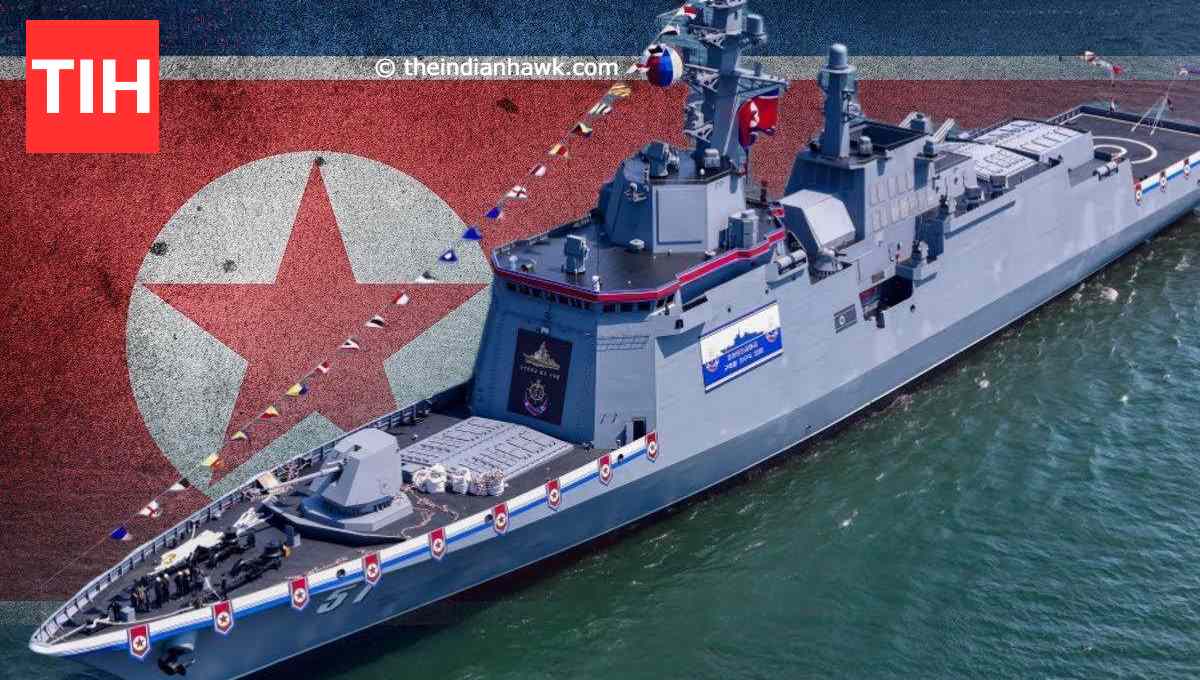
North Korea has declared its commitment to constructing another 5,000-ton destroyer for its navy. A pledge made public by state media on Tuesday. This announcement follows the successful launches of two similar warships earlier this year. This is a clear sign that Pyongyang is steering full speed ahead with its naval expansion, despite international scrutiny and regional tensions.
At a rally held Monday at the Nampho Shipyard, workers vowed to have the new vessel, dubbed “Choe Hyon-class Destroyer No. 3,” completed by October 10, 2026. That date, deeply symbolic, marks the anniversary of the founding of North Korea’s ruling Workers’ Party.
The shipyard’s manager delivered an impassioned address, urging workers to “uphold the party’s plan for building a powerful army” and to “firmly defend the inviolable maritime sovereignty and national interests.” According to the official Korean Central News Agency, the new destroyer will stand as “a powerful warship of our own type.”
Kim Jong Un’s Drive for Naval Supremacy
Supreme Leader Kim Jong Un has personally overseen North Korea’s recent naval milestones, including the April launch of the country’s inaugural 5,000-ton destroyer, the Choe Hyon. He was also present for the May launching of the destroyer Kang Kon, which experienced technical difficulties but was subsequently repaired and re-launched in June.
These developments underscore Kim’s ongoing ambition to bolster North Korea’s naval firepower in the face of what Pyongyang calls “ever-evolving external threats.” The latest ships reportedly feature enhanced missile capabilities and modern electronic warfare suites, although exact specifications remain shrouded in secrecy.
Russian Influence? Seoul Raises Concerns
South Korea’s military has raised alarms over the possible involvement of Russia in North Korea’s destroyer program. Officials in Seoul suggest that Moscow may have traded advanced shipbuilding know-how for North Korean boots on the ground in Ukraine—a claim neither Pyongyang nor Moscow has confirmed. Such collaboration, if true, could help North Korea circumvent longstanding technological and resource hurdles imposed by international sanctions.
Changing Tides in Inter-Korean Relations
North Korea’s naval push is unfolding against the backdrop of a recent thaw in inter-Korean relations. South Korea’s newly elected president, Lee Jae-myung—a relative dove compared to his ousted predecessor—has halted loudspeaker propaganda broadcasts along the border, dialing back a campaign that had resumed in response to North Korea’s own provocative actions.
In a seeming gesture of de-escalation, Pyongyang also ceased its eerie propaganda broadcasts into the South, bringing a rare silence to the heavily fortified border region.
Looking Ahead
If completed on schedule, the Choe Hyon-class Destroyer No. 3 will enter service next October as a showpiece of North Korea’s naval ambitions. Observers will be watching closely—not only for technical milestones but also for potential shifts in regional security dynamics.
As both Koreas adjust their strategies amid changing leadership and naval posturing, the waters off the Korean peninsula are set to remain as unpredictable as ever.
(With agency inputs)