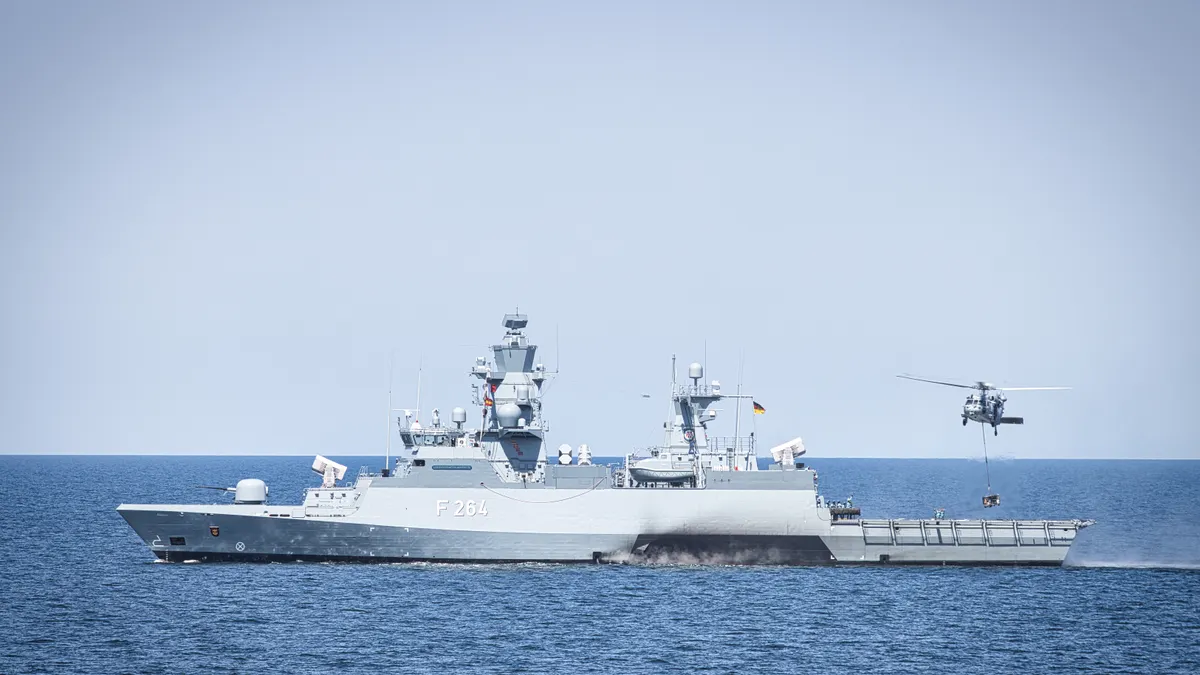
Quick take: The Netherlands plans to contribute air-defence and command frigate HNLMS Evertsen to the European Union’s Operation Aspides from mid-December 2026 until early January 2027. The ship will help protect commercial vessels transiting the Red Sea, according to a 20 November announcement by the Dutch government.
The deployment comes amid continuing concern over maritime security near the Bab al-Mandab Strait, a strategic chokepoint connecting the Red Sea with the Gulf of Aden. The Netherlands said the frigate’s role will be defensive: escorting and protecting shipping against potential attacks rather than conducting offensive strikes.
What Is the Evertsen Deployment?
The Dutch government said HNLMS Evertsen will join Operation Aspides for a limited period beginning in the second half of December. The announcement was made by the ministers responsible for foreign affairs and defence in a letter to the Dutch parliament. The ship is an air-defence and command frigate equipped to build and maintain a picture of threats around a naval formation.
The frigate had already been operating in the wider region for around six weeks in preparation for a possible international mission. The Dutch government said it also had an international staff embarked. A separate possible mission in the Strait of Hormuz had not been activated at the time of the announcement.
Why the Red Sea Route Matters
The Bab al-Mandab is one of the world’s important maritime chokepoints. Commercial ships passing through it connect the Indian Ocean with the Red Sea and the Suez Canal route to Europe. Disruption can force vessels to divert around the Cape of Good Hope, adding time, fuel costs and pressure to global supply chains.
The route is also relevant to energy and trade flows. The Dutch government highlighted the economic consequences that further restrictions on navigation could have for European shipping companies, industry and consumers. The strategic importance of the corridor means that threats to commercial vessels can quickly become an international security concern.
Operation Aspides: A Defensive EU Mission
Operation Aspides is the European Union’s maritime security mission intended to help safeguard freedom of navigation in the Red Sea and surrounding waters. The Dutch announcement described Evertsen’s task as protecting and escorting ships against possible attacks. It explicitly said the mission is defensive and is not intended to conduct attacks of its own.
A frigate’s contribution can include air surveillance, threat assessment, communications and the ability to defend itself and nearby ships. The exact procedures depend on the mission mandate, rules of engagement and the threat environment. The Dutch statement did not announce a change to the operation’s mandate.
The Threat Environment Remains Unpredictable
The Red Sea security situation has been affected by the wider conflict in Yemen and attacks on shipping in the region. The Houthis have said they would leave some Western vessels alone, but the Dutch government warned that the volatile situation still creates increased risks for commercial shipping.
Naval escorts can reduce risks for ships operating in a threatened area, but they cannot guarantee that every vessel will be protected at all times. Effective maritime security also depends on intelligence sharing, coordination among navies, commercial risk assessments and the ability to respond quickly to emerging threats.
Could Evertsen Be Sent to the Strait of Hormuz?
The Dutch government said Evertsen had also been preparing for a possible international mission in the Strait of Hormuz. That mission had not been activated, and the Netherlands said it could decide to send the ship there if the mission were triggered. The EU had been informed of this contingency.
The Strait of Hormuz and the Red Sea are separate strategic chokepoints, but both are vital to international shipping. Any decision to shift the frigate would depend on political authorisation, the mission’s requirements and the evolving security situation.
What to Watch Next
The immediate milestone is Evertsen’s arrival and integration into Operation Aspides in December. Observers will be watching the duration of the deployment, the level of threat to commercial shipping and whether other European states provide additional naval contributions.
Bottom line: The Dutch deployment of HNLMS Evertsen adds an air-defence frigate to the EU’s effort to protect Red Sea shipping. Its defensive mission underlines Europe’s concern about freedom of navigation and the economic consequences of disruption at the Bab al-Mandab chokepoint.
With inputs from the Netherlands Ministry of Defence and the Dutch government (20 November 2026).