
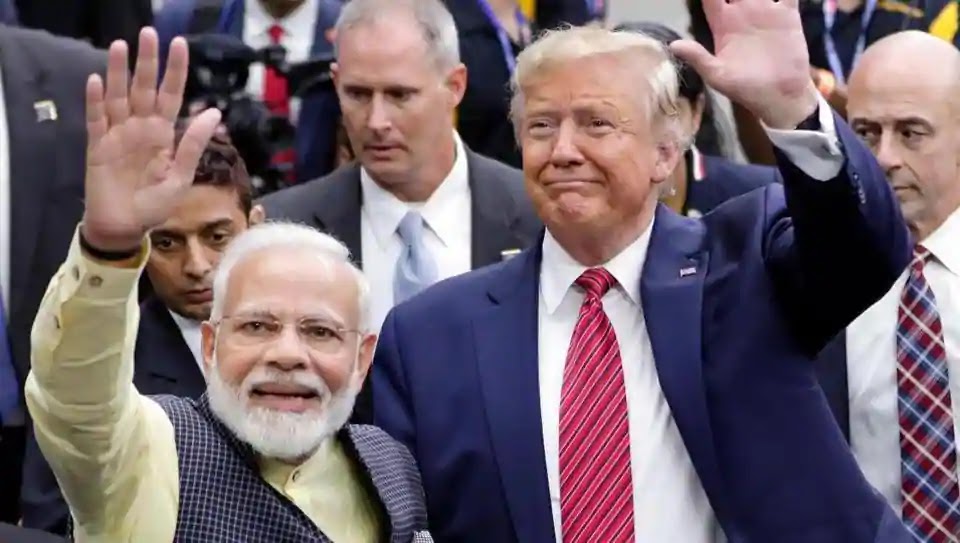

The third India-US two plus two dialogue is expected to take place here on October 26-27 with the Narendra Modi government ready to sign the Basic Exchange and Cooperation Agreement (BECA) for geo-spatial cooperation. The last of four military communication foundational agreements, BECA is an important precursor to India acquiring armed drones such as the MQ-9B from the US as the unmanned aerial vehicle (UAV) uses spatial data for pinpointed strikes on enemy targets.
The India-US interaction at the ministerial level will expand sharply this month with external affairs minister S Jaishankar meeting his US counterpart Mike Pompeo at the Quad security dialogue in Tokyo on October 6. This will be followed by the visit of US deputy secretary of state Stephen Beigun in mid-October and finally US defence secretary Mark Esper and defence minister Rajnath Singh will join the two foreign ministers in the two plus two dialogue.
While the dates for the two plus two are being finalised, the signing of BECA will be a very significant development as it allows India to use global geo-spatial maps of the US for accuracy of stand-off weapons like cruise and ballistic missiles.
Already the two countries have activated all the three foundational agreements with both using each other’s designated military facilities for refuelling and replenishment. The communication agreement allows both countries to share military information about threats on land and the Indo-Pacific.
During the two plus two, both the US ministers will meet Prime Minister Narendra Modi as well as his National Security Advisor Ajit Doval, who has a direct line to his US counterpart Robert O’Brien.
While the global security environment will be addressed by the defence and foreign ministers, the Chinese aggression in Ladakh and in the South China Sea will be discussed in detail with both sides sharing their assessment. Just as the People’s Liberation Army is continuing to aggressively posture on Taiwan in the South China Sea, it is showing no intentions of drawing down from the Ladakh sector despite talking about disengagement and de-escalation.
The dialogue will coincide with the Chinese Communist Party plenary on October 26-29, where the 370 Central Committee members will interact with the paramount leader Xi Jinping to review important policy decisions including the next five-year plan.
The situation in Afghanistan will be discussed during the two plus two with India circumspect about peace in Kabul despite fully understanding the American decision to withdraw after 19 years.
Even though India engaged the Taliban leadership at the Doha dialogue in September, it wants the Sunni conservative group to reduce violence in Afghanistan so that the country remains a republic and does not become an Islamic Emirate.
Unabated cross-border terrorism from Pakistan will be also a topic of discussion, with proscribed groups like the Jaish-e-Mohammed and Lashkar-e-Tayebba continuing to target both innocent civilians and security forces in Jammu and Kashmir.
Despite Pakistan trying to use its all-weather ally China to walk out of the Financial Action Task Force (FATF) grey list, the Islamic state continues to export terrorists and jihadists from Kashmir to Azerbaijan with the help of Turkey.