
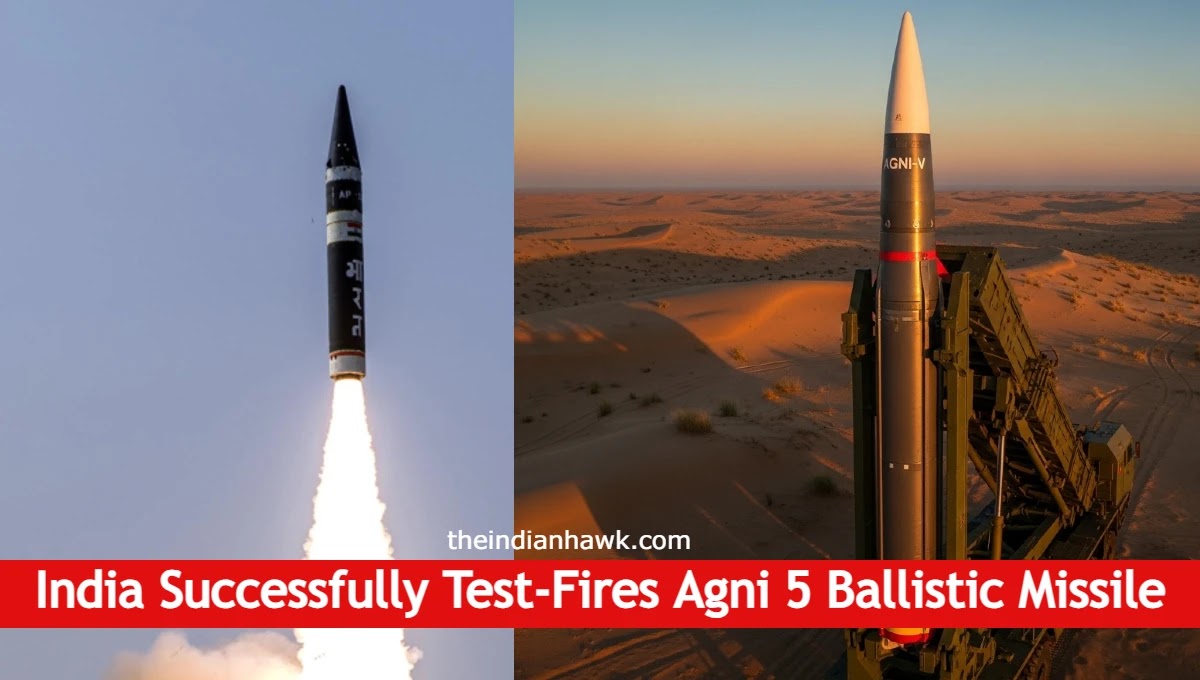
Chandipur, Odisha: India has successfully test-fired the Agni 5 ballistic missile, an intermediate-range weapon developed by the Defence Research and Development Organisation (DRDO), from the Integrated Test Range (ITR) in Chandipur, Odisha. The launch confirms India’s growing strategic defense capabilities and operational readiness.
According to the Ministry of Defence, the test validated all operational and technical parameters and was carried out under the supervision of the Strategic Forces Command (SFC).
The intermediate-range ballistic missile Agni-5 was successfully test-fired from Chandipur on August 20. The launch validated all operational and technical parameters,” the Ministry stated.
Also read – Axiscades Technologies Lands ₹600 Crore Defence Deals from DRDO and BHEL.
Key Highlights of the Agni 5 Missile Test
- Launch Date: August 20, 2025
- Launch Location: Integrated Test Range (ITR), Chandipur, Odisha
- Missile Type: Intermediate-range ballistic missile (IRBM)
- Range: Up to 5,000 kilometers
- Development Agency: DRDO
- Oversight: Strategic Forces Command (SFC)
- Technology: Indigenous design with advanced navigation and control systems
Agni 5 and India’s Strategic Leap
The missile tested on Wednesday is a variant of the Agni-5, which is part of India’s broader intercontinental ballistic missile (ICBM) program. The system has been designed with a focus on long-term national security objectives, offering extended range and precision targeting capabilities.
Also read – DRDO successfully test-fires Laser-Guided Anti Tank Missile.
The Agni-5 missile is capable of carrying Multiple Independently Targetable Re-entry Vehicles (MIRVs)—a technology that enables a single missile to hit multiple targets simultaneously. This feature was successfully demonstrated during a previous trial on March 11, 2024, signaling India’s entry into an elite group of MIRV-capable nations.
Background: India’s Missile Development Program
India’s Agni missile series forms the backbone of its land-based nuclear deterrent. The Agni-5, being the most advanced in this lineup, represents a significant technological leap with its extended range and enhanced payload capacity.
- Agni-I to Agni-IV have shorter ranges (700–3,500 km)
- Agni-V extends this capability to 5,000 km
- The MIRV-enabled Agni-5 enhances strategic versatility and survivability
Also read – Why Kaveri Engine Failed in Making A Powerful Gas Turbine for Fighter Jets?
Why This Test Matters
This successful launch reinforces India’s strategic deterrence posture and highlights its capability to project power across regions. With increasing global security challenges, the test comes as a reaffirmation of India’s defense preparedness.
FAQs: Agni 5 Ballistic Missile Test
What is the range of the Agni 5 missile?
The Agni 5 has a range of up to 5,000 kilometers, making it an intermediate to intercontinental-range missile.
Where was the Agni 5 tested?
It was launched from the Integrated Test Range in Chandipur, located in Odisha, eastern India.
What is special about the Agni 5 missile?
It can be equipped with MIRV (Multiple Independently Targetable Re-entry Vehicle) technology, allowing it to hit multiple targets in a single launch.
Who developed the Agni 5 missile?
The missile was developed by the Defence Research and Development Organisation (DRDO) of India.
Why is the Agni 5 test significant?
It strengthens India’s strategic deterrent and confirms the missile’s operational readiness under real-world conditions.
{ “@context”: “https://schema.org”, “@type”: “FAQPage”, “mainEntity”: [ { “@type”: “Question”, “name”: “What is the range of the Agni 5 missile?”, “acceptedAnswer”: { “@type”: “Answer”, “text”: “The Agni 5 has a range of up to 5,000 kilometers, making it an intermediate to intercontinental-range missile.” } }, { “@type”: “Question”, “name”: “Where was the Agni 5 tested?”, “acceptedAnswer”: { “@type”: “Answer”, “text”: “It was launched from the Integrated Test Range in Chandipur, located in Odisha, eastern India.” } }, { “@type”: “Question”, “name”: “What is special about the Agni 5 missile?”, “acceptedAnswer”: { “@type”: “Answer”, “text”: “It can be equipped with MIRV (Multiple Independently Targetable Re-entry Vehicle) technology, allowing it to hit multiple targets in a single launch.” } }, { “@type”: “Question”, “name”: “Who developed the Agni 5 missile?”, “acceptedAnswer”: { “@type”: “Answer”, “text”: “The missile was developed by the Defence Research and Development Organisation (DRDO) of India.” } }, { “@type”: “Question”, “name”: “Why is the Agni 5 test significant?”, “acceptedAnswer”: { “@type”: “Answer”, “text”: “It strengthens India’s strategic deterrent and confirms the missile’s operational readiness under real-world conditions.” } } ] }