
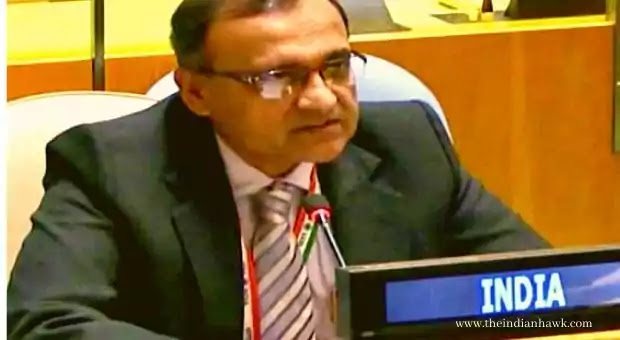

India has called for the winding down of UN peacekeeping missions that have completed their mandates or outlived purpose. Speaking at United Nations General Assembly debate on UN Peacekeeping Operations, India’s envoy to UN TS Tirumurti said, “Peacekeeping missions are meant to be transitional measures and not operate in perpetuity.
There is an urgent need for time-bound exit strategies to ensure that peacekeeping missions do not become instruments for furthering political interests.”
The development assumes significance even as many other missions including United Nations Military Observer Group in India and Pakistan UNMOGIP have long outlived their function. UNMOGIP came into existence after the India, Pakistan war of 1947.
New Delhi, since the Shimla pact of 1972 was signed sees no purpose for it as it doesn’t recognize any 3rd party role in the region. While Pakistan keeps UNMOGIP alive by sending any ceasefire violation report, and for its own political purpose, the last report of the Secretary-General to the Security Council on UNMOGIP was published in 1972.
During the statement by Envoy Tirumuti while lauding UN peacekeepers as the “one singular iconic image that has become synonymous with peace, then it is that of the UN peacekeeper with the blue helmet”, he called for “need for appropriate equipment for not only for safety and security of personnel” and expressed disappointment over lack of “consensus on the need to increase reimbursement rates.”